How to Reheat Cooked Shrimp Safely and Deliciously
Learn reliable methods to reheat already cooked shrimp without drying it out. This guide covers stovetop, oven, microwave, and steam reheating, plus moisture-retaining techniques and safety tips for home cooks.


You can reheat cooked shrimp using several gentle methods: stovetop, oven, microwave, or steam. The goal is to warm through without further cooking. Choose a method based on batch size and desired texture, then add a splash of water, broth, or butter to preserve moisture. Avoid high heat to prevent rubbery shrimp.
Understanding Reheating Shrimp
If you’re wondering how to cook already cooked shrimp, reheating is not about cooking from scratch but warming to a safe serving temperature while preserving texture. Reheated shrimp can turn rubbery if cooked too aggressively or heated too long, so the aim is gentle, even warmth. Shrimp are already cooked, so the process focuses on restoring heat and moisture without overdoing the proteins. The texture you’re after—soft and tender rather than firm and chewy—depends on temperature control, the presence of moisture, and the reheating method you choose. This section will help you understand why reheating matters, what risks to watch for, and how to pick the best approach for different situations, from a quick weeknight dinner to a larger leftovers batch.
Choosing the Right Reheating Method
Not all reheating methods are created equal when it comes to maintaining moisture and tenderness. Stovetop reheating is fast and controllable, making it ideal for small batches. Oven reheating is gentler and more even, which helps if you have more shrimp or want to preserve a coated or sauced finish. Microwave reheating is the quickest option but can easily overcook or unevenly heat, so it requires careful timing and stirring. Steaming is a superb alternative for delicate, tender shrimp because steam provides gentle, uniform heat without direct contact with hot surfaces. Other methods like air frying can work for crisp finishes, but they demand close attention to avoid drying out the meat. Always start with peeled or unpeeled shrimp according to your recipe, as shells can affect heat transfer and flavor.
Stovetop Reheating: Step-by-Step
- Spread shrimp in a single layer in a wide skillet over low to medium heat. Why: a shallow, even layer heats more uniformly and reduces the chance of hot spots.
- Add a tablespoon of liquid (water, broth, or a small amount of butter) to create steam and moisture. Why: moisture prevents drying and helps preserve texture.
- Cover and heat for 2–4 minutes, stirring once halfway. Why: gentle agitation ensures even warming and avoids pockets of heat that toughen proteins.
- Check for warmth and remove from heat just as the shrimp reach your preferred temperature. Why: shrimp can go from warm to overcooked quickly. Tip: If using a sauce, stir it in during the last minute so the shrimp stay tender rather than simmering in a hot sauce.
Oven Reheating: Step-by-Step
- Preheat the oven to a low setting, typically 325–350°F (160–175°C). Why: a lower heat reduces the risk of overcooking.
- Arrange shrimp in a single layer on a rimmed baking sheet and drizzle with a small amount of broth or olive oil. Why: a light coating keeps moisture from evaporating.
- Cover the sheet with foil to trap steam and bake for 8–12 minutes, depending on batch size. Why: even heat helps retain juiciness.
- Remove the foil for the last 1–2 minutes if you want a slightly drier finish or a sauced coat. Why: exposed shrimp can brown a touch without becoming tough. Tip: Let the shrimp rest for a minute after removing from the oven to distribute heat evenly throughout the pieces.
Microwave Reheating: Step-by-Step
- Place shrimp in a microwave-safe dish in a single layer to promote even heating. Why: a single layer prevents steaming in a pile that heats unevenly.
- Add 1–2 tablespoons of liquid or a pat of butter to help maintain moisture. Why: moisture acts as a buffer against drying.
- Cover with a microwave-safe lid or vented plastic wrap and heat on 50–70% power for 30–60 seconds, then stir. Why: stirring breaks up hot spots and prevents overcooking.
- Repeat in 15–30 second bursts until the shrimp are just warm throughout. Why: shorter bursts give you better control over texture. Tip: Don’t overcook; microwave heat concentrates quickly and can turn shrimp rubbery if left too long.
Steaming: A Gentle Alternative
- Fill a pot with a couple of inches of water and place a steamer basket over it. Why: steam is a gentle heat that preserves moisture.
- Layer shrimp in the steamer basket in a single layer. Why: even exposure to steam yields uniform warmth.
- Cover and steam for 3–5 minutes, or until shrimp are heated through. Why: steaming reduces direct contact with hot surfaces, minimizing texture loss.
- Remove and serve immediately or toss with a fragrant drizzle to finish. Why: serving promptly preserves tenderness. Tip: If you’re reheating in a sauced dish, steam first, then fold sauce in after warming to avoid thinning the sauce due to steam exposure.
Flavor and Texture Enhancers
To keep shrimp juicy and tasty after reheating, you can add small flavor boosters: a squeeze of lemon, a teaspoon of butter, garlic, or herbs. Why: flavors rejuvenate quickly and help mask any slight changes in texture that come with reheating. Always heat gently before adding delicate aromatics to avoid scorching. If the shrimp were cooked with a sauce or glaze, reheat with the sauce to preserve that cohesive flavor profile. Consider finishing with a light dusting of salt or a pinch of acidity (lemon juice or a splash of white wine) right before serving to brighten the dish.
Safety, Storage, and Reheating Frequency
Reheat leftovers promptly and store them correctly to minimize food-safety risks. Keep cooked shrimp refrigerated at or below 40°F (4°C) and reheat only the amount you plan to eat. Do not reheat more than once; repeated reheating can degrade texture and increase risk of spoilage. When in doubt, rely on smell and texture: shrimp should smell clean and look pink and opaque after reheating. If shrimp develop an off odor or slimy texture, discard. Always use a thermometer if you have one and heat to a safe serving temperature before eating. These practices help ensure your shrimp remain enjoyable and safe to consume.
Troubleshooting Common Issues
If your reheated shrimp feel rubbery, scale back heat and shorten reheating time. If they taste bland, a quick finish with lemon zest, fresh herbs, or a light sauce can revive the dish without overcooking. For uneven heating, stir more often or separate large batches into single layers to encourage uniform warmth. If the shrimp dry out, reduce the amount of added liquid or use a steaming step to lock in moisture on the next attempt.
Quick Safety Recap for Home Cooks
Always start with clean hands and clean surfaces. Thaw frozen shrimp safely in the fridge or under cool running water before reheating. Avoid letting reheated shrimp sit at room temperature for more than two hours. When in doubt, err on the side of shorter heating times and check texture frequently to prevent rubbery results.
Tools & Materials
- Nonstick skillet(12–-12.5 inch is ideal for even heating in small batches.)
- Lid or foil(Covers the pan to trap steam and heat evenly.)
- Small amount of liquid (water, broth, or butter)(1–2 tablespoons to maintain moisture.)
- Oven-safe baking sheet(Needed for oven reheating; ensure it has edges to catch juices.)
- Microwave-safe dish with lid(Vent lid or cover to allow moisture to stay.)
- Steamer basket (optional)(For gentle steaming method.)
- Food thermometer (optional)(Aim for heat through without overheating.)
- Serving plate and utensils(For immediate serving and portioning.)
Steps
Estimated time: 30-45 minutes
- 1
Choose Reheating Method
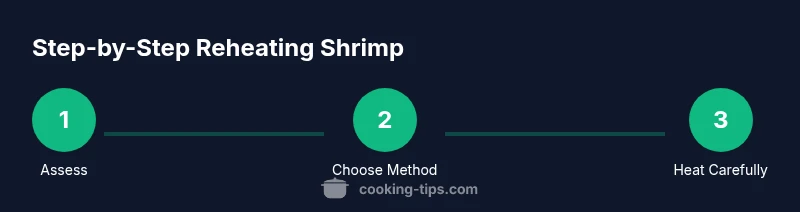
Assess batch size, texture goal, and available equipment. For quick warmth and small portions, stovetop or microwave works; for even heating of a larger batch, use the oven or steam. This initial decision will determine the rest of your process.
Tip: Selecting the right method early prevents overcooking later. - 2
Prep Shrimp for Heating
If shrimp are in a sauce, keep sauce; if not, add a small amount of liquid to promote moisture. Remove any shells if you prefer peeled shrimp for serving, and spread shrimp in a single layer to promote even heating.
Tip: Single-layer placement prevents hot spots and uneven texture. - 3
Heat Gently and Check Frequently
Heat on the chosen method with minimal heat and monitor every 1–2 minutes. Stir or flip shrimp to ensure uniform warmth and to prevent sticking or drying.
Tip: Pause and test texture early to stop before overcooking. - 4
Assess Temperature and Texture
Shrimp should be warm through and opaque, not rubbery. If using a thermometer, aim for heat through without exceeding 120–140°F (49–60°C) to preserve tenderness.
Tip: If you see signs of toughness, reduce heat and shorten remaining time. - 5
Serve or Store Safely
Serve immediately for best texture. If saving leftovers, cool quickly and refrigerate within two hours; reheat once before consuming.
Tip: Label leftovers with date and use within a few days for best quality.
Quick Answers
Is it safe to reheat cooked shrimp?
Yes, it is safe when shrimp are properly stored and reheated to a hot, steaming temperature. Do not reheat leftovers more than once and discard any that smell off or look suspicious.
Yes, you can reheat cooked shrimp safely if you store them properly and heat them until steaming hot, then eat promptly.
Can I reheat shrimp in the microwave?
Yes, but watch closely. Use short intervals, add moisture, and stir frequently to prevent uneven heating and rubbery texture.
Yes, you can reheat in the microwave, but use short bursts and stir often to avoid rubbery texture.
How can I tell if reheated shrimp are done?
They should be warm throughout and opaque with a firm but tender bite. If they’re pale or mushy, heat a bit longer but avoid overcooking.
Shrimp should be warm all the way through and pink with opaque flesh.
What’s the best liquid to add when reheating?
Light liquids like water, broth, or a small amount of butter help retain moisture without heavy sauces overpowering the shrimp.
Use a little water, broth, or butter to keep the shrimp moist as they reheat.
Should I thaw frozen cooked shrimp before reheating?
If frozen, thaw safely in the fridge or under cool running water before reheating for best texture.
Yes, thaw frozen shrimp before reheating to ensure even heating and better texture.
How long does reheating take on stovetop?
Most small portions reheat in about 2–4 minutes on low to medium heat, with a quick stir halfway.
Usually 2 to 4 minutes on the stove for small portions.
Watch Video
Top Takeaways
- Reheat shrimp gently to preserve tenderness
- Choose the method that suits batch size and texture goals
- Add moisture to prevent drying and improve flavor
- Avoid reheating more than once to maintain safety and quality
- Taste and adjust seasoning after reheating