How to Cook Pork Belly: A Practical Guide for Home Cooks
Master pork belly with crispy crackling and tender meat. This step-by-step guide covers selecting, prepping, seasoning, roasting, and serving pork belly for consistently delicious results.


According to Cooking Tips, pork belly requires a balance of fat rendering and skin crackle. This guide shows how to choose, prep, season, and roast pork belly to achieve tender meat with crisp skin. You’ll learn practical steps, timing, and safety tips for reliable results at home, plus trimming, scoring, rubs, and resting ideas.
Choosing the right pork belly
Selecting the right cut sets the stage for tender meat and crackling. Look for a piece with even thickness and a generous fat cap; skin-on options are ideal for crackling, but skinless pieces can work with careful finishing. Weight matters: a 1.2–2.5 kg piece (roughly 2.5–5.5 lb) balances fat rendering with portions that are easy to portion. Freshness is important: choose a piece with a clean, slightly sweet aroma and a pale pink color. If you’re buying from a butcher, request skin-on with the fat cap intact and ask for guidance on scoring if you’re new to the technique. Check for bone, gristle, or heavy moisture that could hinder even cooking. Store pork belly refrigerated and use within 2–3 days for best texture, or freeze for longer storage. For home cooks aiming for consistent results, select skin-on pieces with uniform thickness so heat travels evenly from top to bottom. In Cooking Tips’ guidance, the cut quality largely determines the success of the crackling and the tenderness of the meat.
Preparing pork belly: trimming, scoring, and drying
Before cooking, trim excess fat or connective tissue if it feels excessively thick. Score the skin in a tight crosshatch pattern or straight lines about 1 cm apart; this helps fat render and promotes crisp crackling, but avoid cutting into the meat. Pat the skin thoroughly dry with paper towels, then air-dry the pork belly uncovered in the fridge for 1–24 hours if possible. The longer the skin dries, the better it will crisp when exposed to high heat. Salt the skin lightly and let it sit to draw out moisture further if you have time. When you’re ready to cook, pat once more to dry and proceed with your preferred seasoning. Dry skin plus proper airflow are the twin levers for crackling success, so patience here pays off.
Seasoning and flavor ideas for a crust
A simple, reliable rub starts with kosher salt and white pepper. For flavor depth, add granulated garlic, paprika, or a pinch of brown sugar to encourage caramelization. A 1:1 mix of salt and sugar helps draw moisture from the skin and aids in browning. If you want an Asian-inspired crust, blend five-spice powder with a light soy brushing at the end of roasting. For a herbaceous profile, combine chopped rosemary or thyme with crushed garlic and a drizzle of olive oil. Whatever rub you choose, apply it to the meat’s surface but avoid the skin’s crevices where excess rub can hinder crackling. Allow the seasoned pork belly to rest at room temperature for 15–30 minutes so the fat sinks slightly into the surface, promoting even cooking. If you’re planning to brine, keep the salt content modest to avoid overly salty meat—balance is key to a flavorful crust without masking the pork’s natural richness.
Cooking methods: roasting, pan-searing, and slow braise
There isn’t a single
perfect
method for pork belly; the best approach depends on your equipment and time. A common tactic is roasting skin-side up at a low temperature to render fat slowly, then finishing with high heat to crackle the skin. You can start at 120–140°C (250–285°F) for 1.5–2 hours, then raise the oven to 230–260°C (450–500°F) for 15–25 minutes to blister and crisp. If you’d rather use a pan-sear, start with a well-seared fat cap in a hot skillet, then finish in the oven. For braise, sear the meat to brown, then cook covered with a flavorful liquid (stock, beer, or wine) until the meat is fork-t tender, finishing with a quick broil to crisp the skin. Each method yields a different texture balance—the roast-forward approach tends toward crisper skin and juicier meat, while braising delivers ultra-tender portions. Cooking Tips analysis shows that the chosen method should align with your palate and kitchen setup, not just a recipe. Always use a thermometer to guide internal doneness and to avoid overcooking the fat-heavy belly.
Finishing the crackling: techniques to maximize skin crispness
Crisp crackling hinges on moisture control and heat. After the low-and-slow phase, pat the skin dry again, brush lightly with oil if desired, and season with a touch more salt. Increase the oven heat or switch to broil for the final 5–15 minutes, watching carefully to prevent burning. You can also finish under a hot grill for 2–4 minutes, rotating to ensure even blistering. If the crackling isn’t immediate, give the pork belly a rest on a rack for a few minutes to let steam escape and then re-crisp for a short burst. Avoid covering the meat during the final phase, since trapped steam will soften the skin. A cold rest can also help set the juices, making slicing cleaner and more appealing. If you notice steam or smoke, ensure your pan has adequate ventilation and keep a watchful eye on the surface during finishing.
Resting, slicing, and serving
Rest is essential for juicy meat and neat slices. Transfer the roast to a cutting board and tent lightly with foil for 10–15 minutes to reabsorb juices. Slice against the grain in 1–1.5 cm (approximately 1/2 inch) thick slices for tenderness. If you scored the skin, you can serve with the crisp skin on top or separate the skin for added texture. Offer accompaniments that balance richness, such as tangy apples, pickled onions, roasted vegetables, or a bright herb chimichurri. Grains or potatoes—like roasted potatoes or a light mashed potato—make excellent starch companions. For leftovers, refrigerate promptly and reheat gently; pork belly reheats well in a low oven or a skillet with a splash of stock. Keep any leftovers within 3–4 days for best quality, and consider freezing for longer storage.
Troubleshooting common issues
If the skin stays pale and soft, ensure the skin was dry and exposed to high heat during finishing. A soggy or pale skin usually means excess moisture or too low cooking heat. If the meat is tough or dry, the belly may have been cooked too long or at too high a temperature without sufficient fat rendering; consider lowering the roast temperature slightly and increasing the time to allow natural fats to render. For overly salty results, rinse or soak lightly before cooking next time or reduce the amount of rub. If the crackling breaks, it may be due to overly thick fat cap or insufficient airflow; trim or score deeper, and lift the meat higher in the oven to improve air contact. Finally, if air pockets appear in the meat, adjust the oven’s humidity by using a water tray in the oven or simply covering the pan with foil during the slow roast to regulate moisture.
Flavor pairings and menu ideas
Pork belly’s richness pairs well with acidic or sweet counterpoints. Try apple-based sauces, balsamic reductions, or a quick pickled onion relish. Fresh green vegetables—such as sautéed greens or a simple cucumber salad—offer a refreshing balance. Roasted root vegetables, mashed potatoes, or polenta provide comforting starchy sides. For a weeknight dinner, serve slices with a quick herb gremolata. For weekend feasts, present as a centerpiece with a seasonal vegetable medley and a tangy fruit sauce to cut through the fat. If you’re serving leftovers, a pork belly hash with eggs makes a satisfying next-day meal. The key is to balance the meat’s richness with brightness from acids, herbs, and a touch of sweetness from glaze or reduction.
Tools & Materials
- Pork belly (skin-on or skin-off, 2–3 lb / 900–1350 g)(Choose a piece with even thickness; skin-on preferred for crackling)
- Sharp knife or boning knife(For trimming and scoring)
- Kitchen scale(For portioning and even cooking)
- Roasting pan with rack(Elevates meat for even heat)
- Aluminium foil(To tent during resting)
- Paper towels(Pat dry the skin to help crackling)
- Thermometer (instant-read)(Verify internal temp)
- Dry rub ingredients (salt, sugar, optional spices)(Base rub: salt, white pepper, optional garlic powder, paprika)
- Cooling rack or wire rack(Air circulation during cook)
- Parchment paper(For easy cleanup)
Steps
Estimated time: 2 hours 15 minutes
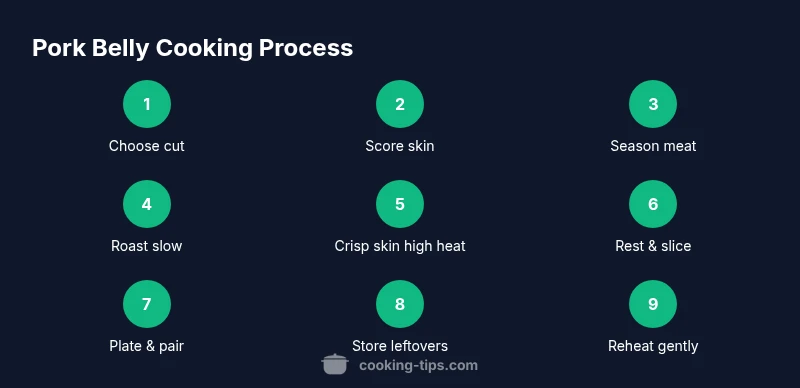
- 1
Prepare the pork belly and preheat the oven
Pat the pork belly dry, trim excess fat, and preheat your oven to a low roasting temperature. The goal is to start rendering fat gently while keeping the skin intact for later crackling.
Tip: Pat dry thoroughly; moisture is the enemy of crackling, so a dry surface is essential. - 2
Score the skin in a tight pattern
Lightly score the skin in a grid or straight lines, cutting through the fat but not into the meat. This helps fat render and creates channels for heat to reach the skin.
Tip: Score pattern should be even and shallow to avoid cutting into meat. - 3
Apply rub and rest briefly
Season the meat with a dry rub, focusing on the meat side and the fat margin. Let it rest for 15–30 minutes to help the surface adhere to heat and flavor.
Tip: A brief rest helps the rub stay on the surface during roasting. - 4
Roast at low temperature to render fat
Place on a rack in a roasting pan and roast at 120–140°C (250–285°F) for 1.5–2 hours, allowing fat to render slowly and the meat to become tender.
Tip: Use a rack to ensure air contact around the belly for even rendering. - 5
Increase heat to crisp the skin
Raise the oven to 230–260°C (450–500°F) or switch to the broiler for 15–25 minutes until the skin puffs and turns deep amber.
Tip: Keep a close watch during high-heat finishing to avoid burning. - 6
Check internal temperature and rest
Use an instant-read thermometer to ensure the meat reaches about 145°F (63°C), then rest for 10–15 minutes before slicing.
Tip: Resting prevents juices from running out when you cut. - 7
Slice against the grain
Carve pork belly into 1–2 cm thick slices and serve with the crackling on top for maximum texture contrast.
Tip: Cut against the grain for the most tender bite. - 8
Plate with bright accompaniments
Pair with tangy onions or apples, roasted vegetables, and a light green salad to balance richness.
Tip: A acidic or fruity component contrasts the fat well. - 9
Store and reheat leftovers safely
Cool quickly, refrigerate in airtight containers, and reheat gently in a low oven or skillet with a splash of stock.
Tip: Leftovers reheat best when covered loosely to retain moisture.
Quick Answers
What is the best method for achieving crispy crackling on pork belly?
For reliable crackling, dry the skin thoroughly and finish with a high-heat blast after a slow roast. Avoid moisture on the surface and ensure even contact with high heat.
Dry the skin completely and finish with a blast of high heat for crackling, while avoiding any moisture on the surface.
Should you score the skin before cooking pork belly?
Yes. Scoring helps fat render and creates channels for heat to reach the skin, improving crispness. Do not cut into the meat.
Yes, score the skin to help render fat and crisp the skin, but don’t cut into the meat.
Can you refrigerate seasoned pork belly overnight before cooking?
You can refrigerate seasoned pork belly overnight to enhance the crust, but keep it uncovered in the fridge to continue drying the skin.
Yes, you can refrigerate overnight to deepen the crust; just keep it uncovered so the skin dries.
Is pork belly safe to cook without skin?
Skin helps crackling and texture. Without skin, you can still cook pork belly, but you’ll lose the crispy skin and need alternative textures from fat rendering and seasoning.
You can cook it without skin, but you won’t get crisp crackling and you’ll lose some texture.
What internal temperature should pork belly reach?
Pork belly is typically cooked to about 145°F (63°C) with a short rest to maintain juiciness. Thicker cuts may benefit from longer rendering at low heat.
Aim for around 145 degrees Fahrenheit and rest briefly before slicing.
Can you freeze cooked pork belly leftovers?
Yes, freeze leftovers in airtight containers. Reheat gently to avoid drying out the meat; the crackling texture may soften after freezing and thawing.
Yes, you can freeze leftovers. Reheat gently to keep the meat juicy; crackling may soften after freezing.
Watch Video
Top Takeaways
- Choose skin-on pork belly to maximize crackling.
- Pat dry skin thoroughly before cooking.
- Roast low to render fat, then finish high for crackling.
- Rest the meat, then slice against the grain.
- Use a thermometer to guide doneness and avoid overcooking.