Does cooking food extend shelf life? A practical guide
Explore how cooking affects shelf life, how temperature and storage impact safety, and practical steps to safely store, reheat, and extend the freshness of leftovers.


Does cooking food last longer? Yes, cooking can extend shelf life by reducing harmful bacteria, heat-activated enzymes, and moisture that promotes spoilage. However, extension depends on proper cooling, storage, and handling. According to Cooking Tips, the real gains come when cooked foods are chilled promptly, kept cold, and reheated safely. So cooking helps, but good refrigeration and time control are essential.
Understanding shelf life basics
Shelf life refers to the period during which a food remains safe to eat and retains desirable quality. When we cook, we kill many surface and some internal microbes, and heat can inactivate enzymes that hasten spoilage. Yet cooking does not make food invulnerable to spoilage forever. Factors such as moisture content, acidity, and storage temperature determine how quickly cooked foods deteriorate. For home cooks, the essential takeaway is that cooking can improve safety and extend usability, but only when followed by proper cooling, airtight storage, and timely consumption. Remember the keyword: does cooking food make it last longer, and the answer hinges on how you handle food after heating as much as on the heat itself.
Nutrition and flavor considerations also come into play. While cooking reduces spoilage organisms, it can also alter texture and moisture, which can influence perceived freshness. A well-cooked dish that is stored correctly may taste near its original quality for a few days, whereas improper storage accelerates staling and textural changes.
How cooking affects spoilage mechanisms
Cooking damages cell walls of microbes and denatures proteins, reducing the initial microbial load. It also lowers moisture activity in some foods, making it harder for surviving microbes to thrive. However, many spore-forming bacteria can survive heat and recover during cooling if not handled properly. The upshot for home cooks is clear: cooking lowers immediate risk, but it does not grant permanent safety. Safe handling—cooling quickly, using shallow containers, and storing at proper temperatures—shapes the true shelf life improvement you get from cooking.
In practical terms, cooked foods should be treated as more perishable than their raw counterparts if left at room temperature. This means strict adherence to the two-hour rule (one hour for hot climates) and prompt refrigeration to minimize the time the food spends in the danger zone between 40°F and 140°F (4°C–60°C).
Temperature and time: the danger zone
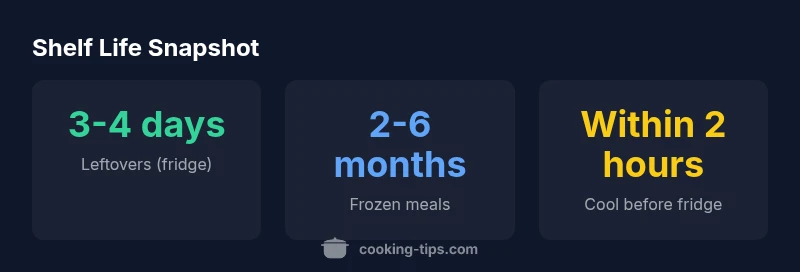
The danger zone is where bacteria multiply rapidly. After cooking, food should be cooled from 135°F (57°C) to 70°F (21°C) within two hours, then down to 40°F (4°C) or lower as quickly as possible. If cooling is slow or occurs in a large mass, heat pockets can persist, allowing microbial growth. Rapid cooling can be achieved by dividing food into shallow containers, spreading it in a thin layer, or using a chill bath. The two-hour rule is a guideline, not a guarantee—your fridge temperature, the vessel size, and your air circulation all affect results. By keeping foods out of the danger zone, you preserve flavor and safety longer.
A few foods cool more quickly than others because of moisture content and density; liquids and stews may need more space to cool evenly than dense roasts or baked dishes.
Cooling, refrigerating, and freezing cooked foods
Optimal storage strategies are the backbone of extending shelf life. After cooking, transfer foods to airtight containers or wraps to limit exposure to air and moisture loss. Refrigerate promptly at or below 40°F (4°C). For longer storage, freezing is the most reliable option: most cooked dishes maintain acceptable quality for 2-6 months depending on the item. When thawing, do so in the fridge or microwave rather than on the counter to avoid temperature abuse. Labeling containers with dates helps track freshness and plan consumption before quality declines. While freezing slows microbial growth, it does not kill all organisms, so safe handling remains essential after thawing.
- Use shallow, vented containers for hot foods to accelerate cooling.
- Keep the fridge at a steady temperature and avoid overpacking shelves.
Reheating and safe reuse of leftovers
Reheating is the final test of whether a cooked dish can be safely enjoyed later. Reheat to a minimum internal temperature of 165°F (74°C) to destroy potential pathogens that grew during storage. Bring foods to 165°F/74°C and hold for at least 15 seconds. If reheating portions, ensure even heating by stirring or rotating containers. Do not reheat multiple times; reheating only once or twice is generally recommended for best taste and safety. If a dish develops an unusual smell, off-color, or slimy texture, discard it rather than risk foodborne illness.
Consider portioning meals into single-serving sizes before refrigeration to minimize repeated cycles of cooling and reheating. This practice supports both safety and quality.
Food type considerations: meat, grains, dairy, and produce
Different foods respond differently to cooking and storage. Meat and poultry require stricter temperature control because of higher risk of pathogenic bacteria; dairy products like soft cheeses can be sensitive to temperature fluctuations; starchy staples such as rice and pasta benefit from quick cooling and airtight storage, though rice must be cooled rapidly to avoid Bacillus cereus spores. Vegetables, especially leafy greens, can lose texture with prolonged refrigeration but can still be safe if stored properly. Understanding these nuances helps you tailor strategies to each category, rather than applying a single rule to all foods.
Practical strategies that extend life without sacrificing quality
- Cook in smaller batches and chill quickly. Smaller portions cool faster and more evenly, reducing the time food spends in the danger zone.
- Invest in airtight containers, and label with date and reheating instructions. Clarity reduces waste and improves safety.
- Don't leave cooked foods at room temperature for extended periods. Use ice baths, coolers, or quick-chill methods when necessary.
- Plan meals to reuse ingredients in multiple ways, reducing waste and maintaining quality. Reheated dishes often taste best when a fresh component is added.
- Prioritize safe reheating temperatures and avoid reheating more than once. Quality and safety often decline with repeated heating cycles.
Common myths about cooking and shelf life
Myth: Frozen foods never lose quality. Reality: Freezing slows spoilage, but texture and flavor can degrade over time. Myth: Cooking always makes leftovers safe forever. Reality: Safety depends on storage conditions and handling, not just the fact that something was heated. Myth: All leftovers taste as good after reheating. Reality: Some dishes reheat better than others due to moisture content and structure. Myth: Refrigeration alone guarantees safety. Reality: Temperature control and sanitary handling are equally essential.
Putting it all together: a simple plan for home cooks
- Cook to proper temperatures and cool rapidly in shallow containers.
- Refrigerate promptly at or below 40°F (4°C) and use airtight storage.
- Freeze for longer-term storage when possible, and label with dates.
- Reheat to 165°F (74°C) and avoid repeated reheating.
- Date and rotate leftovers so you eat the oldest items first. A small, consistent system reduces waste and boosts safety.
Shelf-life ranges for common foods after cooking and cooling
| Scenario | Storage Condition | Approx Shelf Life (range) |
|---|---|---|
| Raw poultry (uncooked) | Refrigerated (≤40°F / 4°C) | 1-2 days |
| Cooked poultry | Refrigerated (≤40°F / 4°C) | 3-4 days |
| Cooked rice | Refrigerated (≤40°F / 4°C) | 4-6 days |
| Cooked pasta | Refrigerated (≤40°F / 4°C) | 3-5 days |
| Frozen cooked meals | Frozen | 2-6 months |
| Cooked vegetables | Refrigerated (≤40°F / 4°C) | 3-5 days |
Quick Answers
Does cooking kill all bacteria in food?
Cooking kills many microbes and inactivates enzymes, reducing immediate risk. Some heat-resistant spores can survive and require proper cooling and storage to prevent growth. Safe handling remains essential after cooking.
Cooking reduces most microbes, but some spores can survive; proper cooling and refrigeration are still essential.
How long can I refrigerate leftovers after cooking?
Most cooked leftovers are best consumed within 3-4 days when refrigerated at 40°F (4°C) or below. For longer storage, freezing is recommended.
Keep leftovers in the fridge for about 3 to 4 days, or freeze for longer storage.
Does freezing cooked food kill bacteria?
Freezing slows or stops bacterial growth but does not reliably kill all bacteria. Thaw safely in the fridge or microwave and reheat to safe temperatures.
Freezing slows bacteria; you still need to reheat properly after thawing.
Can I refrigerate meat after cooking if it was marinated?
Marinating before refrigeration is fine, but always store in a sealed container and within the two-hour rule. Cook to safe temperatures and refrigerate promptly.
Yes, as long as you keep it sealed and cooled promptly.
Are all foods equally safe to reheat?
Not all foods reheat well or safely. Some textures or ingredients may degrade with reheating. Ensure even heating to 165°F (74°C) and avoid reheating multiple times.
Most foods can be reheated safely with even heating to 165°F, but quality may vary.
What’s the fastest way to cool hot leftovers?
Divide into shallow containers, use an ice bath, or spread thinly to maximize surface area for rapid cooling. Once cool, refrigerate promptly.
Use shallow containers or an ice bath to cool fast, then refrigerate.
“Cooked foods carry far fewer pathogens than raw foods, but safe handling from cooking through storage is essential to truly extend shelf life.”
Top Takeaways
- Cook and cool promptly to extend life.
- Store leftovers in airtight containers.
- Refrigerate within 2 hours to stay within safety margins.
- Freezing extends shelf life, but quality may vary by food type.
- Label with dates and reheating instructions.