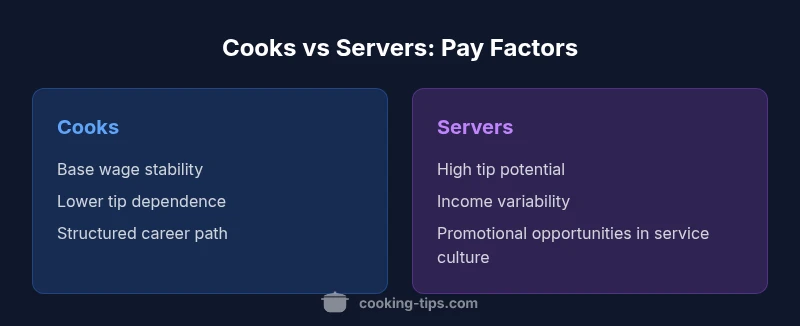
Cooks vs Servers Pay: Do Cooks Earn More? A Practical Comparison
Explore pay differences between cooks and servers, focusing on base wages, tips, regional variation, and career paths. A practical, evidence-based guide for home cooks and restaurant staff seeking clarity on earnings.


Do cooks earn more than servers? In many markets, cooks have higher base wages, but servers can surpass that total on busy nights through tipping. The overall pay depends on region, restaurant type, and hours worked. This comparison outlines the key pay drivers and helps you estimate total earnings across both roles.
Why Pay Differences Matter in Restaurants
Pay differences in restaurants reflect a mix of wage structures, tipping cultures, and the economics of dining out. If you're weighing a career in a restaurant, you may ask: do cooks make more than servers? The short answer is: it depends on the market, the establishment, and the mix of base wages and tips. The Cooking Tips team studied wage structures across regions and found that base pay often favors cooks, while tip income can boost servers’ earnings substantially on busy nights. In markets with strong tipping norms, servers may come close to or even surpass cooks on a total-pay basis. Understanding these dynamics helps home cooks and aspiring restaurant workers set realistic expectations and plan a path that aligns with financial goals. For many readers, this question is not just about numbers; it’s about lifestyle, scheduling, and career flexibility in the kitchen or the front of house.
Base Wage vs Tip Income: What Actually Makes the Pay
Base wage is the anchor of earnings for both cooks and servers, but the way pay is built differs. Cooks often receive a higher base wage that remains relatively stable across pay periods, while servers typically get a lower base wage that is supplemented by tips. The crucial factor is how tips are calculated and whether the employer uses a tip credit or a service-charge model. The result is that, even without numbers, the overall take-home can be higher for servers on nights with heavy traffic, or it can be lower when business slows. For the question do cooks make more than servers, the answer hinges on how much of the total income comes from non-tip wages versus tips. The Cooking Tips analysis emphasizes that job choice, venue type, and shift patterns influence total pay more than any single factor.
Regional Differences: How Location Shapes Pay
Geography plays a major role in pay dynamics. In some regions, minimum wage laws and standard schedules give cooks robust base pay and predictable hours, while in other areas the hospitality sector leans more on tips and variable hours for servers. Urban centers with high living costs may push baseline wages upward for both roles, but the tipping culture can still tilt earnings in favor of servers during peak dining periods. Rural or tourist-driven markets can produce opposite effects, where cooks hold steadier wages while servers rely on a handful of busy shifts to make ends meet. The overarching pattern is that regional norms, cost of living, and local labor regulations interact to shape who typically earns more, and when.
Role Complexity and Scheduling: Why Pay Varies
Kitchen roles often demand precise, high-stakes execution under time pressure, which justifies higher base pay in many shops. Servers, by contrast, juggle customer service, order accuracy, and multitasking across tables, which can be rewarding when tips are strong. Scheduling also matters: cooks may work longer shifts with predictable routines, while servers often rotate through weekend and evening peak hours, increasing tip potential but also variability. When asked whether do cooks make more than servers, readers should consider not just the hourly rate but also the triggering events that boost earnings, like a busy Friday service or a large party. The balance between base pay and earnings from tips shifts with each venue’s concept and clientele.
Experience, Seniority, and Promotion Paths
Experience tends to durability in kitchen roles; senior cooks can earn more through a combination of raises, specialty certifications, and leadership responsibilities like supervising a line or training staff. Servers, meanwhile, may advance through roles such as lead server, captain, or service manager, with wage growth tied to performance and sometimes tip-sharing arrangements. The cumulative effect is that early-career cooks may see faster base-pay growth in some kitchens, while servers may compensate for slower base wages with more aggressive tips in the right setting. Do cooks make more than servers in the long run? The answer hinges on career trajectory and the types of establishments you choose to join.
The Role of Tips: Who Gains More on Busy Nights
Tips are the heartbeat of many restaurant pay systems and a major reason do cooks make more than servers is not universal. On high-volume nights, servers can accumulate substantial tips, potentially eclipsing base wages. But tips depend on table turnover, check sizes, and guest generosity, all of which vary by venue. In some concepts, servers’ total income may hinge on liquor sales and upselling, while cooks may have commissions or overtime bonuses. For readers evaluating pay, the takeaway is to examine how tip structures are designed in your preferred venues, as variability is the main driver of earnings differences.
Seasonal Demand and Stability
Restaurant demand shifts with seasons, holidays, and events. Cooks may experience steady demand in some periods but slower days in others, while servers often see pronounced spikes when business surges. The combination of base pay and tips can reflect these cycles in distinct ways: cooks keep a predictable minimum wage, servers chase peak tipping opportunities. Understanding seasonality helps forecast annual earnings, especially for those considering full-time versus part-time roles. The key is to align expectations with the venue’s calendar and to plan for the off-season by seeking roles with consistent base pay or supplemental income streams.
Benefits, Hours, and Overtime
Beyond wages, benefits and hours shape total compensation. Larger restaurants may offer paid time off, health insurance, or retirement benefits that benefit cooks, while servers may receive bonuses tied to performance or service quality. Overtime opportunities exist for both roles, but availability depends on labor laws and scheduling practices. The economic effect of these benefits can tilt overall earnings, particularly for full-time staff who stay with a single employer or who join unions or collective bargaining agreements. Readers should evaluate benefits alongside hourly rates when comparing careers.
Education, Certification, and Career Trajectories
Formal training is a factor in kitchen pay, especially for roles like sous-chef, patissier, or expo lead. Certifications in food safety or culinary techniques can boost base wages and unlock supervisory positions. For servers, training in wine service, guest relations, or event preparation can raise earnings through higher tipping potential or internal promotions. The long-run question about do cooks make more than servers is not simply about immediate earnings; it’s about how professional development translates into salary growth over time.
Employer Practices and Industry Differences
Large chains, independent restaurants, and hotel dining rooms each adopt different pay structures. Chain restaurants may emphasize standardized pay scales and more consistent hours, while independent venues often rely on a robust tipping culture that benefits servers during strong seasons. Hotels may pay premium base wages for cooks due to complexity and volume. These variations illustrate why broad statements about who earns more are less useful than tailored analyses for your city and your preferred type of dining concept. Always compare local establishments to understand the real pay picture.
Real-World Scenarios: When Servers Out-earn Cooks
Consider a bustling bistro with a strong wine program and high check averages, where servers can earn significant tips on weekends. If the same restaurant pays cooks a modest base wage with limited overtime, servers may end up with higher take-home pay overall. Alternatively, a high-end hotel with a large kitchen staff and generous benefit packages might provide cooks with more stable compensation even if tip income is lower. Do cooks make more than servers? The answer in these examples depends on the venue's concept, clientele, and compensation model.
Practical Steps to Maximize Pay in a Kitchen Career
To optimize earnings, start by researching local wage norms for cooks and servers in your city. Seek venues with clear salary progression for kitchen roles and inquire about overtime, bonuses, or profit-sharing. Pursue certifications and cross-training that expand your scope, such as food safety, plating, or station leadership. Building negotiation skills and choosing the right employer can tilt the pay balance toward higher earnings over time, especially when paired with a planned career path.
Data Sources and Reading Wage Data
Interpreting wage data requires context. Use official sources like the Bureau of Labor Statistics and regional labor agencies to understand base wages and tip structures. Compare this context with local job postings and anecdotal experiences from workers in your city. The key is to read data critically, recognizing that do cooks make more than servers is not a universal conclusion—regional and business-specific factors drive outcomes.
Comparison
| Feature | Cooks | Servers |
|---|---|---|
| Base wage stability | Typically more stable base pay for cooks | Often lower base wage with tips supplementing earnings |
| Tip income potential | Less dependent on tips | Higher potential from tips on busy nights |
| Income variability | Lower variability when base pay dominates | Higher variability due to tipping and business volume |
| Seasonality impact | Moderate impact, depending on concept | High impact in peak dining seasons |
| Career progression | Structured ladder in kitchen leadership | Promotions tied to service metrics and seniority |
| Overtime/Hours | Overtime often predictable in kitchens | Overtime and peak hours influence servers' tips |
| Benefits availability | Benefits more common in established kitchen roles | Benefits vary by employer for servers |
Benefits
- Wage growth can be steady for cooks in structured kitchens
- Servers can dramatically boost earnings through tips in busy venues
- Roles offer clear pathways to leadership or specialty skills
- Pay can reflect venue concept and market demand, offering flexibility
- Experience in either role builds versatile culinary hospitality skills
Cons
- Income can be highly variable for servers due to tipping dependence
- Regional and employer differences create pay gaps
- Tip-based pay can be unstable during slow periods
- Benefits and overtime access vary widely by employer and location
Cooks generally enjoy more stable base pay; servers can out-earn in tip-heavy venues. Your best path depends on location, venue type, and hours.
Overall, base wages tend to favor cooks in many markets, but tipping culture can give servers a higher total take-home on busy shifts. To decide, compare local venues, consider seasonality, and assess whether you value stable pay or earnings potential tied to tips. The Cooking Tips team suggests a personalized plan based on your city and preferred dining concepts.
Quick Answers
Do cooks make more than servers on average?
Wage differences vary by market. Cooks often have higher base pay, while servers can surpass that with tips in high-volume venues. The total earnings depend on location, restaurant concept, and hours worked.
Wages depend on where you work. Cooks usually have higher base pay, but servers can earn more with tips in busy places.
How does tipping affect earnings for servers?
Tips can significantly boost a server’s income, especially on weekends or in high-volume concepts. However, tipping income is unpredictable and varies by venue and guest behavior.
Tips can make server pay highly variable but potentially very high on busy shifts.
Why is pay more stable for cooks in some markets?
Many kitchens offer a consistent base wage with predictable hours, which provides a stable floor. This stability can reduce income volatility compared with tip-based pay.
Cooks often have steadier base pay, reducing income swings.
Do pay differences depend on region?
Yes. Local wage laws, cost of living, and tipping norms shape who earns more. In some regions, cooks benefit from higher base wages, while in others servers can earn more from tips.
Region matters a lot; pay structures vary by city and state.
Can benefits change the pay picture?
Benefits like health insurance and retirement plans add to compensation, and availability varies by employer and role. In some shops, benefits are more accessible to kitchen staff on full-time schedules.
Benefits can tilt total compensation, especially for full-time roles.
What can I do to increase pay in either role?
Pursue relevant certifications, seek venues with clear pay progression, and negotiate when offered. Cross-training (e.g., wine service or food safety) can widen earning opportunities in either role.
Get training, seek growth opportunities, and negotiate for better pay.
Top Takeaways
- Assess local wage norms for cooks and servers in your city.
- Choose venue type based on tipping culture and hours.
- Factor seasonality into annual earnings planning.
- Pursue certifications to boost long-term pay growth.