Difference Between Cook-and-Serve and Instant Pudding
Explore the difference between cook-and-serve and instant pudding, focusing on texture, prep time, flavor control, and practical uses for everyday desserts.


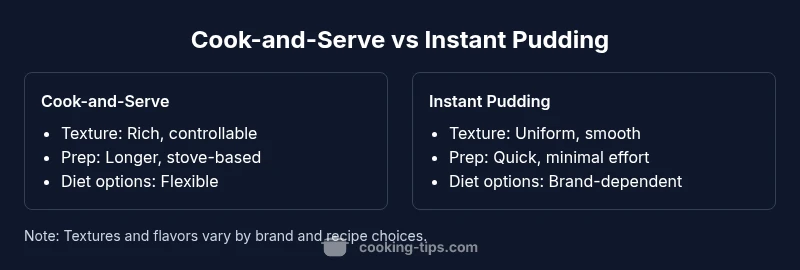
Cook-and-serve pudding requires cooking on the stove and chilling before serving, while instant pudding uses a ready-to-make powder mix that only needs mixing with milk. The difference affects texture, flavor control, and prep time, with cook-and-serve offering more nuance and instant pudding delivering speed and consistency. For home cooks, the choice hinges on texture depth versus time savings.
difference between cook and serve and instant pudding: overview
In this guide, you’ll learn how cook-and-serve pudding and instant pudding compare across texture, ingredients, and execution. According to Cooking Tips, understanding these differences helps home cooks select the right approach for the occasion, whether you’re aiming for a homemade feel on a special night or a dessert that comes together in minutes. The Cooking Tips team found that most households switch between these two modes depending on time constraints and audience expectations. This middle section dives into the core distinctions, practical steps, and common pitfalls so you can confidently choose the method that aligns with your kitchen goals.
What is cook-and-serve pudding?
Cook-and-serve pudding is a traditional approach that starts with a starch-thickened custard base. You typically combine milk, sugar, and a starch (such as cornstarch or flour) with heat until the mixture thickens to a glossy, scoopable consistency. Flavorings like vanilla, cocoa, or cinnamon are added toward the end. The texture tends to be richer and more nuanced because you control the thickness, sweetness, and ingredients from scratch. It also allows for dairy substitutions or alternate milks for dietary needs. The development of texture occurs during cooking and even during chilling, which means the final mouthfeel can feel more “homemade.”
What is instant pudding?
Instant pudding uses a pre-mixed powder that contains starches, flavorings, and stabilizers. You simply whisk or whisk-and-chill with milk to set the dessert in a short amount of time. This method is designed for speed and consistent results; the texture tends to be uniformly smooth and less prone to lumps once properly mixed. Flavor variety is broad because many brands offer multiple flavors, but customization options are more limited than making a custard from scratch. Instant pudding excels in busy kitchens, classrooms, and gatherings where reliability and minimum effort matter.
Texture and mouthfeel: how they differ
Texture is the defining difference between these two pudding styles. Cook-and-serve yields a creamier, more indulgent mouthfeel with detectable thickness that can be adjusted by the ratio of milk to starch and by simmering duration. You can influence gloss, creaminess, and even the presence of a delicate film on top. Instant pudding, by contrast, emphasizes uniform smoothness and a consistent bite across servings. The powder mix is designed to dissolve cleanly, reducing the risk of gritty texture if the milk is added correctly and the mixture is whisked thoroughly. For palate lovers seeking depth, cook-and-serve often wins; for a reliably smooth texture with less effort, instant pudding shines.
Preparation steps and time investment
Cook-and-serve pudding demands more active time. You’ll measure, whisk, simmer, and monitor the custard as it thickens, then cool it before chilling. The total process typically spans several minutes of cooking plus refrigeration time to firm up the texture. Instant pudding offers a markedly shorter path: blend with cold milk, whisk until the mixture thickens, and refrigerate briefly if desired. The overall time savings can be substantial, making it a practical choice on busy evenings or when desserts must be ready quickly for a crowd.
Flavor options and customization
Flavor versatility is a major consideration. Cook-and-serve allows for granular control over sweetness, salt, extract intensity, and dairy choice, enabling you to tailor the flavor profile to specific menus or dietary needs. You can also experiment with add-ins like melted chocolate, spices, or fruit purees to create a signature dessert. Instant pudding provides a broad flavor library through brand variations, but customization is more about selecting a flavor and optional toppings rather than altering the base texture. If you enjoy culinary experimentation, cook-and-serve offers more creative latitude.
Ingredient control, sugar, and dietary considerations
With cook-and-serve, you control sugar levels, starch type, fat content, and dairy alternatives, giving you a path to reduced sugar or dairy-free versions. This is especially important for guests with dietary restrictions. Instant pudding tends to be calibrated by brands for a consistent sweetness and texture, which can limit adjustments. If you need to accommodate allergies or dietary choices, cook-and-serve typically provides more reliable room for substitution. However, always verify ingredient lists for each brand when choosing instant mixes.
Storage, shelf life, and leftovers
Both pudding styles benefit from proper refrigeration. Cook-and-serve leftovers should be stored in an airtight container and consumed within a few days for best texture. Instant pudding, already prepared, also stores well in the fridge for a few days, though the exact shelf life depends on the product and added toppings. If you plan to layer puddings or use toppings, keep components separate to maintain texture and avoid sogginess. Good storage practices help reduce waste and preserve flavor.
Practical kitchen scenarios: when to use which
For a special dinner or a dessert that benefits from a homemade impression, cook-and-serve is often the preferred route. It lets you manage mouthfeel, sweetness, and dairy choices for a more sophisticated result. On the other hand, instant pudding is ideal for quick weeknight treats, classroom activities, or last-minute hosting where predictability and speed take precedence over depth of flavor. A prudent strategy is to keep a few quick mixes on hand for emergencies, while reserving scratch-made pudding for occasions that deserve more culinary attention.
Common pitfalls and troubleshooting
Common issues with cook-and-serve include lumps from incomplete mixing, scorching if the heat is too high, and under- or over-thickened textures if the starch ratio isn’t dialed in. To troubleshoot, whisk consistently, heat gradually, and test the pudding’s thickness as you go. With instant pudding, the most frequent problems are under-mixing leading to lumps or failing to chill long enough for set. Use a whisk or blender to ensure smooth texture, and refrigerate for the recommended minimum time to achieve a stable set.
How to decide: a quick decision guide
A quick decision guide starts with your time budget and desired texture. If you want depth of flavor, a custard-like mouthfeel, and control over ingredients, choose cook-and-serve. If the priority is speed, reliability, and minimal effort with consistent result, choose instant pudding. Consider your audience and context: a homemade impression for guests or a fast, reliable option for a school project or busy night.
Comparison
| Feature | Cook-and-Serve Pudding | Instant Pudding |
|---|---|---|
| Texture and mouthfeel | Richer, creamier texture with adjustable thickness | Smooth, uniform texture from pre-mixed powder |
| Preparation time | Longer; involves cooking, cooling, and chilling | Shorter; mix with milk and refrigerate briefly |
| Ingredient control | Full control over sugar, fat, dairy, and flavorings | Limited control; dependent on brand formulation |
| Flavor versatility | Many flavors with room for custom add-ins | Broad flavor options from brands, with fewer customizations |
| Storage & shelf life | Leftovers store well in fridge for a few days | Prepared pudding stores for a few days; shelf life depends on mix and toppings |
| Best use case | Special occasions, texture-focused desserts | Quick, reliable desserts for busy days or large groups |
Benefits
- Instant pudding saves time and reduces prep steps
- Cook-and-serve yields richer texture and more flavor control
- Both options offer versatility with toppings and mix-ins
- Accessible ingredients and straightforward methods for most home kitchens
Cons
- Cook-and-serve requires more time and attentive cooking
- Instant pudding can taste less rich and offer limited texture depth
- Dietary substitutions are easier with cook-and-serve but still require care
- Both options rely on refrigeration for best quality
Cook-and-serve offers superior texture and flavor control, while instant pudding wins on speed and consistency.
The choice depends on priorities: texture and customization favor cook-and-serve, while speed and reliability favor instant pudding. The Cooking Tips team emphasizes matching the option to your schedule and dessert goals.
Quick Answers
What exactly is cook-and-serve pudding?
Cook-and-serve pudding is a traditional method where you cook a starch-thickened custard on the stove, then cool and chill it before serving. It offers a richer texture and greater control over sweetness and dairy choices. It requires more cooking time but rewards with depth of flavor.
Cook-and-serve pudding is a homemade custard-based dessert you cook on the stove and chill, giving you richer texture and more control over ingredients.
Is instant pudding suitable for people with dietary restrictions?
Instant pudding can be suitable for some dietary needs, depending on the brand and flavor. You should check the ingredient list for dairy, gluten, or allergen concerns and choose a variant that aligns with your restrictions. In some cases, you may need to adjust with dairy-free milk or flavorings.
Instant pudding might work with dietary needs, but always read the label for allergens and consider dairy-free milk options.
Can I make instant pudding taste like homemade?
While you can enrich instant pudding with fresh flavors, toppings, and mix-ins, it will not fully replicate the texture of a from-scratch custard. You can improve depth by adding vanilla, citrus zest, or chocolate, and by layering textures with whipped cream or fruit.
You can boost flavor with add-ins, but it won’t quite match homemade custard texture.
Which pudding is better for a large gathering?
For large gatherings, instant pudding offers speed and uniformity across many servings. Cook-and-serve can scale, but it requires more kitchen effort and careful timing to maintain consistency across batches.
Instant pudding is usually the easier option for big groups, but cook-and-serve can impress with richer texture if you have enough time.
How should I store leftover pudding?
Store leftovers in an airtight container in the refrigerator. Consume within a few days for best texture and flavor, and keep toppings stored separately if possible to avoid sogginess.
Keep leftovers in the fridge in a sealed container and use within a few days.
Is cook-and-serve dairy-free or suitable for vegans?
Cook-and-serve can be adapted for dairy-free diets by using plant-based milks and appropriate thickeners, but the texture can differ from dairy-based versions. Instant pudding brands also offer some dairy-free options, though flavor depth may vary.
You can make dairy-free versions with plant milks, but texture may vary.
Top Takeaways
- Assess your time budget before choosing a pudding type.
- Choose cook‑and‑serve for texture depth and flavor control.
- Opt for instant pudding for quick, consistent results.
- Experiment with mix-ins to customize flavor.
- Refrigerate leftovers promptly to maintain texture and safety.