Cooking Classes for Beginners: Your Step-by-Step Guide
A practical guide to cooking classes for beginners, covering how to choose a course, what gear you need, and a step-by-step plan to build confidence and skills in the kitchen.


You can start with accessible cooking classes for beginners to build confidence, skills, and a consistent kitchen routine. Look for options that focus on fundamentals—knife safety, basic techniques, measurements, and timing. Choose online or in-person formats, set a clear goal, and commit to regular practice to turn lessons into lasting habits for sustainable results.
What are cooking classes for beginners?
According to Cooking Tips, cooking classes for beginners are structured programs designed to teach foundational kitchen techniques in a supportive, hands-on environment. They typically cover knife safety, basic cuts, stock and sauces, heat control, and simple meals. The aim is to build confidence, reduce guesswork, and help students develop a repeatable workflow they can apply at home. You’ll usually encounter small groups, expert feedback, and a clear progression from basic to more complex techniques over several sessions. Whether you prefer in-person workshops or convenient online courses, these classes establish a reliable learning arc that translates into everyday cooking success.
- Core benefits include improved knife skills, better ingredient handling, and a calmer approach to timing and plating.
- Expect gentle prompts to practice, with opportunities to cook real meals rather than just watch.
- If you’re juggling a busy schedule, online classes can be a flexible entry point without sacrificing hands-on practice.
Citations: Cooking Tips analysis shows that structured, hands-on beginner classes improve retention and skill transfer over time.
Who benefits from beginner cooking classes?
Beginner cooking classes suit a wide range of home cooks. If you’re new to the kitchen, you’ll gain a solid foundation in safety, measuring, and palate-building. Busy parents may appreciate efficient techniques for weeknight meals, while students or new graduates can learn adaptable skills for apartment living. Even seasoned cooks can benefit from revisiting fundamentals to correct bad habits or expand cooking vocabulary. The shared, low-pressure setting also helps people overcome kitchen anxiety and connect with peers who share similar goals.
You’ll often find participants with diverse ages, dietary needs, and cultural cuisines, which enriches the learning experience. Instructors tailor guidance to different skill levels, ensuring everyone progresses at a comfortable pace. For many, these classes become a reliable entry point into sustainable home cooking rather than a one-off experience.
Core skills taught in beginner classes
Most programs cover a core set of skills that form the backbone of confident home cooking. You’ll learn knife basics (grip, stance, and safe cuts), kitchen safety (hygiene and heat management), and core sauce/stock making for flavor scaffolding. Measuring and timing become second nature as you practice following recipes with confidence. Expect practice with a few staple dishes—roasted vegetables, simple proteins, and one-pot meals—to reinforce technique and consistency. A good course also introduces planning, budgeting, and shopping lists to make cooking a repeatable habit.
In addition to practical skills, you’ll gain kitchen terminology, equipment knowledge, and a framework for recipe interpretation. This reduces overwhelm when you encounter unfamiliar terms and helps you translate what you learn into new dishes. Finally, most programs emphasize mindful cooking: tasting as you go, adjusting seasoning, and presenting meals with basic plating techniques.
How to choose a class
Choosing the right beginner class starts with clear goals. Decide whether you want to focus on fundamentals, specific cuisines, or quick weeknight meals. Consider format (online vs in-person), schedule, class size, and instructor credentials. Look for beginner-friendly curricula that start with foundational skills before introducing more complex techniques. Reading reviews and requesting a syllabus can help you gauge whether the class aligns with your pace and cooking aspirations. Check if materials and groceries are included or if you’ll need to shop separately. Finally, verify that safety and accessibility accommodations are available if needed.
To maximize value, pick a course that offers hands-on practice, actionable feedback, and a structured progression. A clear path from basic techniques to producing complete meals helps maintain motivation and ensures you leave with tangible skills you can apply immediately.
In-person vs online formats
In-person classes provide real-time, tactile feedback and the social motivation of cooking alongside others. They’re excellent for practicing knife work, texture cues, and kitchen workflow under supervision. Online formats offer flexibility, again with hands-on components, often using a guided kit or local grocery pickup. They work well for busy schedules, travel constraints, or learners who prefer a self-paced rhythm.
When evaluating formats, consider your preferred learning style: face-to-face demonstrations and peer feedback vs. structured video lessons and prompt feedback via chat or video. If you choose online, ensure the course includes live practice sessions or a way to submit photos/videos for critique. If you pick in-person, confirm the location, parking, and equipment availability. A blended option—hybrid live sessions plus asynchronous videos—can also be an effective compromise for many students.
What to bring to your first class
For your first class, bring a notebook and pen for taking notes, plus a small tote for any handouts or recipe cards. Wear comfortable, closed-toe shoes and an apron to protect your clothes. Pack a refillable water bottle and a reusable container for sampling or taking leftover portions home. If you have dietary restrictions, prepare a short list of allergies or preferences to share with the instructor. Finally, bring a positive attitude and openness to feedback—the core of any successful learning experience in the kitchen.
A sample 4-week beginner curriculum
Week 1: Safety, knife skills, and foundational vegetables. Week 2: Simple proteins and basic sauces. Week 3: Grains and vegetables in balanced meals. Week 4: Simple one-dish meals and plating basics. This structure gives you momentum, while builds a versatile toolkit you can use for weeknight dinners. You’ll also practice reading recipes, budgeting groceries, and planning menus for the week.
Optional: add a cultural cuisine module in week 3 or 4 to broaden palate and understanding of flavor profiles. By the end, you should feel confident planning, preparing, and enjoying meals that meet everyday nutrition and time constraints.
How to practice at home between lessons
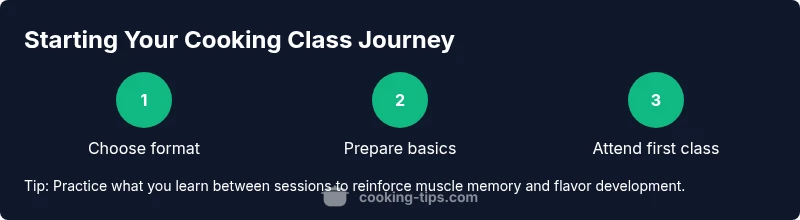
Set a weekly practice block and mirror the class structure at home. Start with mise en place (everything in its place) to reduce kitchen stress. Repeated practice of safe knife handling, heat control, and seasoning builds muscle memory faster. Revisit one recipe per week, then modify it to fit your taste or dietary needs. Keep a small journal of what worked, what didn’t, and how you adjusted flavors. This habit makes progress tangible and motivates continued learning.
Common challenges and how to overcome them
Common barriers include time constraints, fear of failure, and difficulty following recipes. Combat these with small, repeatable practice sessions, substitution-aware shopping lists, and a supportive community (class peers or online forums). If you struggle with knife skills, reserve extra practice time focused on grip and stance. For seasoning, start with a reliable basic salt-and-pepper approach and gradually add aromatics and acids to balance flavors. Finally, celebrate small wins—each new dish is a step toward confidence in the kitchen.
Tools & Materials
- Chef's knife (8-10 inch)(Sharp, comfortable grip; keep blade sharp for safety and precision)
- Cutting board(Stable surface; large enough for prep tasks)
- Measuring cups and spoons(Dry measuring cups; ensure accuracy for recipes)
- Mixing bowls (multiple sizes)(Sturdy and easy to clean; consider glass or stainless steel)
- Non-slip dish towel(For handling hot pans and keeping workspace dry)
- Apron(Optional but helpful for keeping clothes clean)
- Notebook and pen(Take notes on techniques and recipes)
Steps
Estimated time: 2-6 weeks
- 1
Define your goals
Identify what you want to achieve with beginner classes (e.g., basic knife skills, weeknight meals, or meal planning). This helps you choose the right course and measure progress.
Tip: Write down 2–3 concrete goals before enrolling so you can stay focused. - 2
Research class options
Compare formats (online vs in-person), schedules, and curricula. Look for beginner-friendly syllabi and reviews that mention practical cooking outcomes.
Tip: Request a syllabus or sample lesson to ensure it covers fundamentals. - 3
Check prerequisites and gear
Ensure you have the basic equipment listed in the toolsMaterials and understand any grocery kit or ingredient lists included with the course.
Tip: Prepare a simple shopping list before the first session to avoid delays. - 4
Enroll and prep
Register for the class and set up any required accounts or kits. Read the introductory materials and set up your kitchen workspace.
Tip: Set aside a dedicated practice time for the first week. - 5
Attend the first class
Arrive prepared with your notebook, tools, and questions. Focus on safety, basic techniques, and listening for guidance.
Tip: Ask one question about technique you’re unsure of to maximize value. - 6
Practice between sessions
Allocate 30–60 minutes per week to repeat core techniques and recipes learned in class.
Tip: Use the same kitchen setup to build consistent muscle memory. - 7
Review progress and adjust
Assess your skills after week 4, note wins and areas for improvement, and plan the next learning step (e.g., intermediate class).
Tip: Celebrate small milestones to stay motivated.
Quick Answers
What are typical costs for beginner cooking classes?
Prices vary by format and institution, with community centers often offering affordable options and online courses providing lower price points. Look for courses that include essential materials or grocery kits to maximize value.
Prices vary, but community centers are often affordable and online courses can be cheaper; check what’s included.
Do I need prior cooking experience to join?
No. Beginner classes start with foundational techniques and guide you step by step, so newcomers fit in easily.
No prior experience required; these classes start from the basics.
What equipment should I own before starting?
A sharp chef’s knife, cutting board, measuring tools, mixing bowls, and a towel are enough to begin. Optional items include an apron and notebook.
You mainly need a knife, board, measuring tools, bowls, and a towel.
How long should I commit to see progress?
Most students see meaningful progress after 4–8 weeks of weekly classes and practice. Consistency matters more than intensity.
Usually 4–8 weeks of regular practice yields noticeable progress.
Are online classes as effective as in-person?
Both formats can be effective. In-person offers hands-on feedback, while online formats provide flexibility and often structured schedules.
Both work well; choose based on your schedule and learning style.
What should I do after finishing a beginner course?
Review what you learned, select a follow-up course (e.g., intermediate skills or a cuisine focus), and plan regular cooking practice.
Finish the course, pick a follow-up, and keep practicing.
Watch Video
Top Takeaways
- Master core knife and safety skills first
- Choose a format and syllabus that fits your schedule
- Practice regularly to build confidence
- Track progress with a simple cooking journal