Cook Like Your Ancestors: Traditional Techniques vs Modern Methods
A rigorous, analytical comparison of traditional ancestral cooking methods versus modern techniques, with actionable steps to blend heritage practices into today’s kitchen for deeper flavor and sustainable cooking.


Both traditional and modern methods have value; cook like your ancestors for deeper flavor and technique, but balance it with time-saving steps. This comparison shows how slow, wood-fired or cast-iron practices build character, while modern methods optimize consistency and convenience. The best approach blends heritage techniques with today s kitchen efficiency.
The Philosophy Behind Cook Like Your Ancestors
The phrase cook like your ancestors invites home cooks to explore the roots of everyday meals. It is about slow, attentive technique, using ingredients at their peak, and respecting seasonal cycles. In this approach, flavor emerges from cooking processes like browning, reduction, and fermentation rather than relying solely on processed shortcuts. For home cooks, embracing ancestral methods means balancing learning with modern kitchen realities. The Cooking Tips team believes that embracing heritage techniques can deepen your understanding of flavor, texture, and timing while keeping meals practical in a busy week. Readers will discover how ancient practices can still fit into a contemporary kitchen and how to adapt them without sacrificing food safety or convenience. This article examines how cook like your ancestors can be operationalized in a modern home, with a focus on practical, repeatable steps that yield reliable results.
Traditional Techniques in Everyday Cooking
Traditional methods rely on time-tested practices: browning meat to develop flavor, slow braising to tenderize tough cuts, and fermentation to preserve foods and unlock tangy complexity. These techniques work with limited equipment, often using a cast-iron skillet, Dutch oven, or clay pot. The goal is to maximize flavor through patient heat management, moisture retention, and the physics of caramelization. While modern kitchens enable precision, ancestral methods emphasize sensory cues—color, aroma, and texture—as guides. The Cooking Tips team notes that appreciating these cues helps cooks predict outcomes even when equipment differs. Practical lessons include preheating vessels, layering flavors through aromatics, and tracking liquid loss during reduction. Although these techniques require time, they reward cooks with depth and nuance that can elevate everyday meals.
How to Bridge Heritage and Convenience
Bridging heritage and convenience starts with a few scalable practices. Begin by selecting one ancestral technique to master, such as braising in a heavy pot or slow roasting with a dry heat method. Pair this with modern aids like a thermometer, timer, and well-organized mise en place to keep meals predictable. The aim is not to abandon convenience but to use it to support integrity in technique. You can still rely on fresh, seasonal ingredients and traditional flavor builders like garlic, herbs, and a splash of acid to transform simple meals. By documenting outcomes—what worked, what didn t, and how long it took—you’ll build a personal ledger of reliable methods that honor the past while serving today s schedule. This approach makes cook like your ancestors a practical, repeatable framework rather than a romantic ideal.
Core Techniques You Can Recreate Today
You don’t need to become a historical reenactor to enjoy ancestral techniques. Start with a handful of core methods that translate well to modern kitchens. 1) Cast iron searing and pan reductions for seared proteins and rich pan sauces. 2) Braising in a Dutch oven or heavy pot for affordable cuts and tender textures. 3) Fermentation for flavor development and preservation, using simple starters like sourdough, kimchi, or pickles. 4) Oven roasting with a dry heat method to concentrate flavors in vegetables and roots. 5) Smoking or wood flavor via a charcoal or pellet grill to add depth. By practicing these techniques, you can reproduce heritage flavors without a full back-to-the-parman pantry.
Equipment that Proves Worth Keeping
Certain tools make ancestral cooking more accessible in a contemporary kitchen. A well-seasoned cast-iron skillet or a robust Dutch oven remains indispensable for browning, braising, and even baking. Clay pots or ceramic cocottes can provide moisture retention and gentle heat. A mortar and pestle helps imitate traditional grinding and grinding of spices. Keep a sturdy kitchen knife, a wood cutting board, and a set of sturdy tongs. The key is to invest in durable gear that lasts and improves with use, rather than chasing every new gadget. The Cooking Tips team advises maintaining a simple, reliable toolkit that supports flexible techniques.
Ingredient Practices Rooted in Heritage
Heritage cooking often hinges on the way ingredients are prepared before they hit the pan. Soaking and sprouting grains and legumes improves texture and digestibility. Fermentation unlocks depth and preserves foods in times of scarcity. Relying on seasonal produce reduces waste and supports local ecosystems. For breads and doughs, sourdough starters emulate traditional leavening processes that rely on ambient cultures rather than commercial yeasts. Cooking with whole foods, fewer additives, and properly stored staples helps replicate ancestral flavors while staying within modern safety standards. The Cooking Tips team emphasizes authenticity tempered by current nutrition knowledge.
Cooking Timelines and Temperature Management
Temperature control is central to traditional cooking. Slow braises allow connective tissue to break down, creating tenderness and layering flavors, while high heat in short bursts creates crusts and caramelization. In modern kitchens, calibrated ovens and induction burners provide consistent temps, reducing guesswork. The blend is to start with long, low heat when possible, then finish with a high-heat sear for texture. The goal is to reproduce the sensory feedback you expect from heritage cooking while respecting time constraints. Practice, note-taking, and incremental adjustments help you dial in timing for each dish.
Safety and Hygiene Considerations in Traditional Cooking
Traditional methods can introduce specific safety considerations. Cast iron requires proper seasoning and drying to prevent rust; handle hot pots with care to avoid burns. Fermented foods require clean starters and proper fermentation vessels to prevent contamination. When cooking with open flames or wood, manage smoke exposure and ensure safe ventilation. Hygienic prep remains essential: wash hands, clean knives and boards between tasks, and store ingredients correctly. By balancing ancient practices with contemporary food-safety standards, you maintain flavor while protecting your family.
Adapting Ancestral Techniques for Modern Kitchens
Adaptation is about scaling and substituting without losing technique. If you don t have a wood-fired oven, simulate its effects with a preheated stone or a roaring oven followed by a long braise. If you lack a clay pot, use a heavy-bottom Dutch oven that mimics moisture retention. In a small apartment kitchen, portion out longer cooks into multiple batches to maintain texture and moisture control. The key is to maintain the method s core philosophy—time, patience, and respectful ingredient preparation—while embracing the tools modern homes offer. This makes ancestral cooking practical, accessible, and repeatable.
Case Study: A Simple Ancestor Inspired Family Meal
A practical example is a weekend braised chicken with root vegetables cooked in a Dutch oven. Start with a well-seasoned pot, brown chicken pieces in batches to develop color, then remove them and sauté aromatics. Deglaze with a splash of liquid, return the chicken, add chopped roots, herbs, and broth, and slow braise until tender. Finish with a quick high-heat finish to tighten texture. Serve with simple flatbreads or mashed roots. The result is a dish that echoes traditional methods while fitting a modern dinner schedule. This approach demonstrates how you can translate ancestral cooking into weeknight-appropriate meals with technique that matters.
Common Misconceptions About Ancestral Cooking
Many assume ancestral cooking equals heavy fats, long simmer times, and mandatory wood fire. In reality, heritage practices emphasize technique, timing, and ingredient quality more than rustic aesthetics. You can adapt by choosing a few reliable methods, maintaining balance between flavor depth and time, and using safe equipment. Ancestral cooking is not about nostalgia at the expense of practicality; it’s about skillful preparation that honors flavor and texture while meeting contemporary dietary needs and safety standards.
Where to Learn More and How to Start
Begin with a plan to learn one or two core techniques at a time. Seek reputable sources that focus on technique, not just recipe replication. Look for guidance on using cast iron, braising, and fermentation, and consider community cooking classes or workshops that emphasize hands-on practice. Document results, refine timings, and gradually expand your repertoire. The goal is a sustainable practice that enriches your sense of taste and your confidence in the kitchen. The Cooking Tips team offers ongoing insights and practical tips to support learners at every level.
Quick-start Plan: 4-Week Trial
Week 1: Master the cast iron sear and a simple pan sauce. Week 2: Braise a forgiving cut like chuck or bone-in chicken in a Dutch oven. Week 3: Introduce fermentation basics with a simple vegetable pickle or starter. Week 4: Combine the learned techniques in a complete ancestral-inspired meal with sides that highlight seasonality. Each week, document outcomes and adjust heat, timing, and seasoning. This plan provides a structured path to cook like your ancestors without overwhelming you.
Comparison
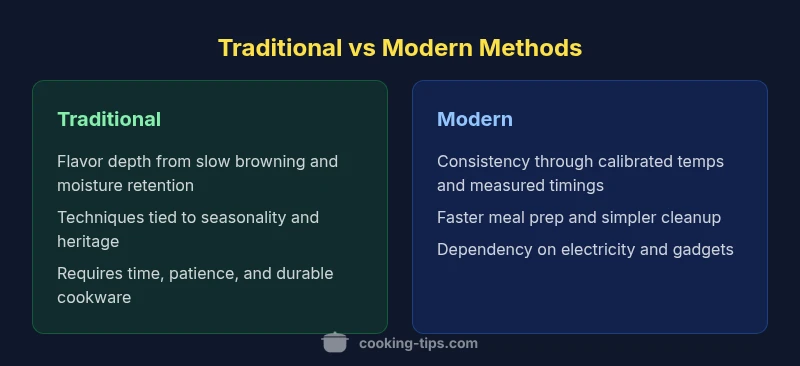
| Feature | Traditional methods | Modern methods |
|---|---|---|
| Flavor development | Deep, layered flavors from slow heat, browning, and moisture retention | Bright, consistent flavors driven by precise temperatures and measured ingredients |
| Time to cook | Longer timelines with flexible pacing and multiple steps | Shorter, predictable timelines with fast prep and cooking cycles |
| Equipment needs | Cast iron, Dutch ovens, clay pots, and open-fire capabilities | Electric ovens, induction burners, blenders, and timers |
| Ingredient handling | Whole, minimally processed ingredients; front-loaded prep | Prepped ingredients with standardized portions and convenience foods |
| Skill required | High tactile skill; texture and color cues matter | Lower variability with gadgets and precise control |
| Safety and maintenance | Seasoned cookware requires care; practice safe handling with heat management | Standard safety practices and routine appliance maintenance |
| Cultural value | Heritage cooking fosters family memory and tradition | Modern methods emphasize efficiency, safety, and accessibility |
Benefits
- Flavor depth through slow, attentive techniques
- Stronger connection to food traditions and family history
- Less reliance on highly processed ingredients
- Skills and confidence built through hands-on practice
Cons
- Longer cooking times and planning required
- May demand specialized gear and careful maintenance
- Inconsistent results if conditions vary (heat source, vessel, ambient temperature)
Heritage techniques deliver richer flavor and stronger skills, but modern methods offer speed and consistency
If flavor depth and culinary learning are priorities, prioritize ancestral methods. For busy households, blend heritage techniques with efficient tools to maintain quality without sacrificing time.
Quick Answers
What does cook like your ancestors mean in modern kitchens?
It means reviving time-tested techniques that emphasize flavor, texture, and process. In practice, it’s about browning, braising, fermenting, and gradual heat control, while adapting to contemporary safety and convenience.
It means reviving old techniques and flavor-building steps, then adapting them to today s kitchen for practical meals.
Is ancestral cooking healthier than modern methods?
Health outcomes depend on ingredient choices and preparation. Ancestral methods often favor whole foods and fewer additives, but the overall health picture still depends on balance, portion sizes, and variety.
Health depends on ingredients and balance, but heritage methods often lean toward whole foods with less processing.
What equipment is essential for ancestral cooking?
A well-seasoned cast-iron skillet or Dutch oven is foundational. Optional but helpful tools include a clay pot, mortar and pestle, sharp knives, and a reliable thermometer.
Start with a cast iron skillet or Dutch oven and add simple tools as you go.
Can I adapt ancestral methods for quick weeknights?
Yes. Use one technique at a time, but leverage modern heat sources and timers to speed up steps without losing the method s essence. Aim for shorter but still flavorful versions.
Absolutely—pick a method, then use timers and precise temps to shorten the process.
Where can I learn authentic techniques without exotic ingredients?
Begin with foundational techniques and locally available ingredients. Community classes, credible blogs, and recipes focused on technique can build competence without needing rare items.
Start with basics and local ingredients; look for classes or trusted guides on technique.
What’s the flavor difference between traditional and modern methods?
Traditional methods tend to yield deeper caramelization and nuanced layers, while modern methods emphasize precise texture and consistency. A blend often provides the best of both worlds.
Heritage methods give deeper flavors; modern methods give consistent texture. Mix them for best results.
Top Takeaways
- Master one core ancestral technique before expanding
- Invest in durable gear like cast iron and Dutch ovens
- Soak, sprout, or ferment where appropriate to unlock texture and flavor
- Use modern tools to support, not replace, traditional methods
- Balance heritage practices with food safety and efficiency