Chicken Soup Slow Cook Recipe: Cozy, Easy Comfort
Learn how to make a comforting chicken soup using a slow cooker with a step-by-step guide, tips, and variations for rich broth, tender chicken, and versatile serving options.


In this guide you will craft a cozy chicken soup slow cook recipe using a standard slow cooker. You'll gather simple ingredients, brown the chicken for depth, and simmer until the meat is tender and the broth flavorful. The method yields a nourishing soup with clear, comforting broth and tender vegetables. It works with boneless chicken, a mix of vegetables, and optional noodles or rice for a heartier finish.
Why a Slow Cooker Makes Chicken Soup Effortless
A slow cooker turns a classic chicken soup into a hands-off, reliable weeknight staple. By simmering gently over hours, you coax maximum flavor from simple ingredients without constant attention. When you start with a basic chicken soup slow cook recipe, you’ll notice the broth becomes clearer and the chicken tenderizes in its own juices, while vegetables release sweetness at a natural pace. According to Cooking Tips, the slow-cook method excels at building depth from aromatics and a modest amount of salt, so you can dial in seasoning at the end rather than over-salting from the start. This approach is friendly to busy households: you can assemble everything in the morning, set the timer, and return to a ready-to-serve pot hours later. The result is a comforting soup that tastes like it simmered on the stove for hours, but with far less hands-on time. Whether you prefer a lean, light broth or a richer, more spoonable texture, this chicken soup slow cook recipe adapts to your pantry and your schedule, making dinner a reliable constant in your weekly rhythm.
Key Flavor Builders for Chicken Soup Slow Cook Recipe
The foundation of a great slow cook chicken soup is flavor depth built without rushing. Start with a good stock or homemade broth as the base; water-only soups tend to taste flat, whereas stock delivers body and a hint of sweetness from simmered bones. Browning the chicken before it enters the slow cooker introduces Maillard flavors that brighten the final soup. Aromatics matter: onions, garlic, celery, and carrots released through sautéing in a splash of oil add sweetness and aroma that carry through the long cook time. Herbs such as bay leaves and thyme lift the broth, while parsley added at the end brings a fresh, green note. Salt should be added gradually: you can always adjust, but you can’t fix over-salting later. For a richer finish, you can fold in a squeeze of lemon or a teaspoon of vinegar to brighten the finish just before serving. Finally, consider add-ins: egg noodles, small pasta shapes, or cooked rice can transform this light soup into a satisfying meal, especially on chilly evenings. Cooking Tips analysis shows that a well-built slow cook technique consistently delivers depth with less active cooking time.
Ingredient Prep and Substitutions
Before you start, line up your ingredients and set out your tools. For the chicken, boneless, skinless thighs offer juicy meat that remains tender after long cooking; bone-in thighs or a whole carcass will produce a deeper, collagen-rich broth. If you’re watching salt, use low-sodium stock and season in stages. Vegetables should include onion, carrot, and celery as a classic trio; you can add leeks or parsnips for extra sweetness. If you don’t have fresh garlic, use a touch of garlic powder, but fresh garlic provides brighter aroma. A bay leaf or two and a sprig of thyme are traditional for depth; fresh herbs can be substituted with dried, but reduce the amount. For a lighter finish, skip noodles or rice and serve with a side of crusty bread; for a heartier bowl, add egg noodles or rice during the last 15 to 20 minutes of cooking. Finally, a small amount of lemon zest or fresh parsley can brighten the finish just before serving.
Flavor and Texture: Broth, Chicken, and Noodles
Crafting the broth is a balance of time and temperature. A steady, low simmer yields a clear broth with delicate flavor, while high heat can cloud the liquid and overcook the vegetables. In a slow cooker, place your aromatics and chicken, cover with stock, and bring to a gentle simmer. Over the course of the cooking period, the chicken will become tender and easy to shred, and aromatics will release their essential flavors. If you’re including noodles, add them near the end so they don’t absorb too much broth and become soggy. For a gluten-free option, serve with rice instead of noodles. Taste the broth before serving and adjust salt, pepper, or acid (a small splash of vinegar) to brighten the flavors. Finally, spoon out a portion and check the balance of fat; if needed, skim excess fat for a cleaner finish.
Stepwise Timing and How to Dial It In
Timing a chicken soup slow cook recipe is about patience and gentle heat. Use the low setting for a longer, steadier extraction of flavor, or the high setting for a shorter window if you’re pressed for time. The key is to keep the lid on so moisture doesn’t escape, which helps concentrate flavors. Check the tenderness of the chicken toward the later portion of cooking and baste with the hot broth to keep meat juicy. If you’re adding noodles, do so only in the final stage to preserve texture. When in doubt, taste a small spoonful and adjust seasoning with salt, pepper, and a touch of acidity. Remember that vegetable texture will soften with time, so plan additions accordingly to maintain your desired bite.
Serving, Storage, and Variations
When the chicken is fork-tender, remove the meat, shred it, and return it to the pot. Ladle the soup into bowls and garnish with fresh parsley or a squeeze of lemon. If you used pasta, serve immediately to avoid sogginess; if not, the soup will store well for several days in the fridge or can be frozen for longer. For variations, swap in turkey stock for a different depth, add sweet corn for a touch of sweetness, or finish with a splash of cream or a dollop of yogurt for richness. This chicken soup slow cook recipe is versatile, so feel free to tailor aromatics and add-ins to your family’s tastes and dietary preferences.
Embracing Leftovers and Make-Ahead Ideas
Leftovers are a gift when you’re short on time. Store cooled soup in airtight containers in the fridge, then reheat gently on the stove or in the microwave. For longer-term planning, freeze portions in freezer-safe bags or containers, label with date, and defrost overnight before reheating. To keep textures bright, keep any noodles separate and add them to bowls as you reheat. You can also prepare a large batch of broth base and freeze it in portions; later, add shredded chicken and fresh vegetables for a quick weeknight dinner. This approach aligns with practical cooking tips that favor planning and flexibility, ensuring you always have a comforting pot of soup ready to go.
Tools & Materials
- Slow cooker (4-6 quart recommended)(Ideal for 4-6 servings; maps well to a family-size pot of soup)
- Chicken thighs (boneless, skinless) or bone-in thighs(Boneless for quicker prep; bone-in for richer broth)
- Carrots, celery, onion (the mirepoix core)(Chopped into bite-sized pieces)
- Garlic cloves(Minced or pressed)
- Chicken stock or broth (low-sodium preferred)(Fill to cover ingredients)
- Bay leaves and dried thyme (or fresh thyme)(Flavor backbone)
- Salt and pepper(Season gradually to taste)
- Optional: egg noodles or rice(Add toward the end if using)
- Parsley or lemon (for finish)(Fresh, bright finish)
Steps
Estimated time: Total time: 4-8 hours
- 1
Gather ingredients and prep
Set up your slow cooker and lay out all ingredients. Chop vegetables and pat chicken dry for better browning. Measure seasonings so you can adjust quickly during cooking.
Tip: Dry chicken well before searing to maximize browning and flavor. - 2
Brown the chicken (optional but recommended)
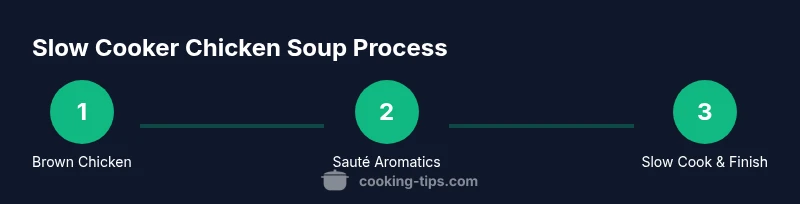
In a skillet, heat a small amount of oil over medium-high heat and sear the chicken until golden on all sides. Transfer to the slow cooker. Browning adds depth to the broth.
Tip: Do not crowd the pan; work in batches if needed for even browning. - 3
Sauté aromatics
In the same skillet, sauté onion, garlic, celery, and carrot until just softened and fragrant. This develops flavor and helps flavor distribute through the broth.
Tip: Scrape up any browned bits from the pan to deepen the base sauce. - 4
Add liquids and seasonings
Pour in stock to cover ingredients. Add bay leaves and thyme; season lightly with salt and pepper at this stage.
Tip: Use low-sodium stock and adjust salt at the end to avoid over-salting. - 5
Cook on low until tender
Cover and cook on the low setting until the chicken is tender and pulls apart easily.
Tip: Resist the urge to peek constantly; let the cooker maintain a steady environment for best flavor. - 6
Shred chicken and adjust seasoning
Remove cooked chicken, shred it, and return it to the pot. Taste and adjust salt, pepper, and acidity as needed.
Tip: Skim fat if you see a lot of surface oil for a cleaner finish. - 7
Add noodles or rice (optional)
If using noodles or rice, add them in the final stage so they retain texture and don’t become soggy.
Tip: Cook noodles separately if you want to keep portions crisp and avoid freezer impact.
Quick Answers
Can I use bone-in chicken for richer flavor?
Yes; bone-in adds richer flavor and more collagen. Remove skin if desired and adjust cooking time accordingly.
Yes, bone-in chicken works well and adds richer flavor and collagen; just adjust cooking time.
Is it safe to cook frozen chicken in a slow cooker?
It's best to thaw chicken before slow cooking. Cooking from frozen is not recommended due to uneven heating.
Thaw the chicken first; cooking from frozen isn't recommended.
Can I add pasta during cooking?
Yes, but add near the end or cook pasta separately to avoid mushy texture.
Yes—add near the end or cook pasta separately to keep texture.
What if the soup is too salty?
Balance with extra water or unsalted stock, and season gradually as it simmers.
If too salty, dilute with water or unsalted stock and adjust with fresh herbs.
How long can leftovers be stored?
Refrigerate for a few days and freeze for longer storage. Thaw in fridge before reheating.
Leftovers keep for a few days in the fridge; freeze for longer.
Watch Video
Top Takeaways
- Brown the chicken for depth.
- Cook on low for tenderness and depth.
- Taste and adjust salt at the end.
- Add noodles near the end if desired.