Can You Use Cooking Spray on Stainless Steel? A Practical Guide
Learn whether cooking spray is safe for stainless steel cookware, why buildup happens, and the best alternatives and care tips for long-lasting shine and performance.


Using cooking spray on stainless steel cookware is not recommended for long-term use. Most sprays contain propellants and emulsifiers that can leave a sticky residue, bake on at high heat, and attract dust. Over time this buildup can darken finishes and reduce heat response. For stainless pans, use a light oil or butter instead, following the pan's care guide.
Why cooking spray on stainless steel can be problematic
Stainless steel cookware is prized for its durability and even heat, but it isn’t magic. Many cooks assume that spray coatings will keep food from sticking, but the reality is more nuanced. Commercial cooking sprays are formulated with propellants, emulsifiers, and oils that can dry out, bake on, and form a stubborn film. That film can be difficult to remove, especially on polished or mirror-finish surfaces. When you repeatedly use spray, you may start to notice spots, a dull haze, or a slight color change near the cooking surface. In everyday home cooking, the smallest amount of this residue can eventually bake into a thin layer that reduces the pan’s heat responsiveness and makes subsequent cleanups more effortful. According to Cooking Tips, the long-term impact of residue on stainless steel is not just cosmetic; it can affect performance, too. The goal is to maintain the pan’s shine and even heating, not to accumulate coatings that require aggressive scrubbing or solvents. For most home cooks, relying on oil or butter and proper preheating delivers reliable results with less fuss.
Key takeaway: residue from spray can compromise both appearance and performance over time, which is why many experts recommend avoiding spray on stainless steel.
What makes sprays different from oils on stainless steel
Cooking sprays are convenient, but their formulation is not ideal for all cookware surfaces. The propellants help dispense the product, while emulsifiers and lecithin improve spread. On stainless steel, these ingredients can leave a tacky film that bonds to the surface during heating. Oils, on the other hand, thinly coat the pan when warmed and then dissipate, leaving little residue. This fundamental difference matters because stainless steel relies on a quick, even film of fat to prevent sticking without creating buildup. Oil behaves more predictably because you control the amount and distribution. Butter adds flavor but can burn at higher temperatures, so many cooks reserve it for finished dishes or lower-heat tasks. By understanding this distinction, you can choose the right fat and application method for each cooking scenario. The Cooking Tips approach is to favor controlled oil use and avoid sprays in standard pan work to preserve surface integrity over time.
Practical note: if you’ve already accumulated a film from spray, approach cleanup with a non-abrasive method to restore the surface before resuming regular oil-based cooking.
How to apply oil correctly on stainless steel (step-by-step method)
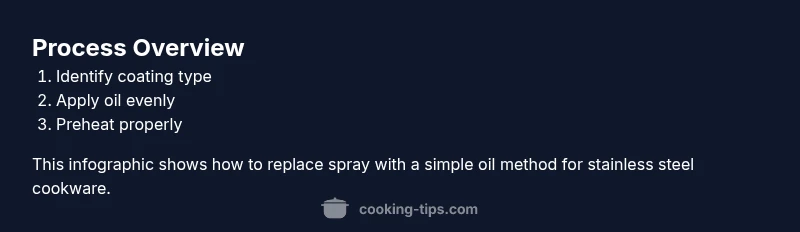
A light, even coating of oil helps prevent sticking and maintains a sear without creating a thick layer of residue. Start with a clean, dry pan and a neutral oil with a high smoke point, such as canola or grapeseed. Warm the pan gently over medium heat for a moment, then add a small amount of oil. Use a folded paper towel or a soft cloth to spread the fat in a thin, even layer, rotating the pan to cover the entire cooking surface. If you’re searing meat or vegetables, you can add a touch more oil after the initial preheat to keep foods from sticking, but avoid pooling. Refrain from spraying directly into the pan incautiously—this is where excess residue and heat-related issues often begin. By mastering this approach, you’ll experience less sticking and easier cleanup, which aligns with reliable, home-friendly cooking practices.
Tip: Always wipe away any excess oil after preheating to avoid a greasy surface that would hamper browning rather than support it.
The heat factor: why temperature matters with oil films
Heat interacts with fat differently depending on the surface and the amount of fat present. On stainless steel, preheating too quickly or using too much oil can cause uneven browning and potential sticking, especially if the pan is dry before oiling. The aim is a brief heat ramp that creates a light beating film on the surface, then a immediate reduction if you’re cooking at high heat. If oil starts to smoke, turn down the heat and wait a moment before continuing; this helps prevent the oil from breaking down and leaving a sticky residue. Understanding this balance helps home cooks maintain performance without the extra cleanup. For many, the best routine is preheat, apply a tiny amount of oil, distribute evenly, and proceed with cooking. The Cooking Tips team notes that a controlled oil approach yields consistent results across a variety of stainless steel pans.
Cleaning routine to prevent buildup after oil-based cooking
Even when you avoid sprays, oil can leave traces that are more tedious to remove if left on the surface for long. After cooking, let the pan cool slightly, then wash with warm water and a mild dish soap using a non-abrasive sponge. For stubborn spots, a gentle baking soda paste applied with a soft pad can lift residue without scratching. Rinse thoroughly and dry completely to prevent water marks and corrosion. Regular maintenance—wiping the surface with a light coat of oil after drying—helps preserve the finish and keeps future meals from sticking. The goal is simple: minimize residue, maximize shine, and simplify cleaning.
Seasoning stainless steel: does it help, or is it overkill?
Seasoning stainless steel is a topic of debate. Unlike cast iron, stainless steel doesn’t need a heavy seasoning to resist sticking. Some cooks apply a very thin layer of oil and heat to create a temporary protective barrier; others skip seasoning altogether and rely on proper preheating, enough fat, and thorough cleaning. If you experiment with seasoning, do so on a small test area to observe how your pan responds. The Cooking Tips guidance emphasizes that for most home cooks, consistent oil application and careful preheating deliver reliable results without the maintenance demands of a traditional seasoning process.
Bottom line: seasoning can be optional and situational; start with basic oil use and evaluate performance before adopting a more involved routine.
Common mistakes and how to avoid them
Avoid using sprays on stainless steel, especially with high-heat recipes. Don’t rely on sprays to prevent sticking if you haven’t preheated properly. Skipping preheating or using too much oil creates a film that’s hard to remove. Don’t ignore manufacturer care instructions; some pans have coatings or finishes that are not compatible with certain fats. Finally, never scrub with abrasive tools on polished surfaces; this can dull the shine. By avoiding these missteps, you’ll maintain better surface integrity and reduce cleanup time over the long term.
Daily cooking tips for stainless steel: practical routines you can use
Consistent habit matters. Preheat your pan on medium heat before adding a thin oil film. Use a paper towel to spread oil evenly and remove any excess. Cook at steady temperatures to avoid scorching oil and food. After cooking, wash promptly to prevent residue from hardening and discoloration. If you notice sticking in a particular pan, re-season lightly or switch to a different oil with a higher smoke point. Keeping a simple routine reduces the chance of buildup and improves longevity.
Tools & Materials
- Neutral cooking oil (e.g., canola or grapeseed)(For light coating to prevent sticking and achieve even coverage.)
- Butter (unsalted)(Flavor option; use sparingly and avoid high heat.)
- Dish soap(Gentle detergent for cleaning after cooking.)
- Warm water(For washing and rinsing.)
- Soft cloth or non-abrasive sponge(To distribute oil and clean without scratching.)
- Paper towels(Used to apply oil thinly and wipe excess.)
- Silicone spatula(For spreading oil and turning food without scratching.)
- Stainless steel cleaner (optional)(For restoring shine on very dulled surfaces.)
Steps
Estimated time: 20-40 minutes
- 1
Inspect the pan and read care instructions
Check the manufacturer’s guidance for your specific stainless steel pan. Look for any coatings or notes about approved cleaners and fats. If the label warns against certain sprays or waxes, abide by those directions to protect the surface.
Tip: Always start with the label—manufacturers know their finishes best. - 2
Choose a light oil or butter as needed
Select a neutral oil with a high smoke point for everyday cooking. Butter provides flavor but can burn; use it selectively on lower- to medium-heat tasks. Avoid sprays altogether.
Tip: Opt for the least amount of fat necessary to create a thin film. - 3
Apply oil with a paper towel for even coating
Warm the pan briefly, then apply a small amount of oil. Use a folded paper towel to spread it in a thin, even layer across the surface. Wipe away any excess to prevent pooling.
Tip: Even distribution matters more than the total amount. - 4
Preheat to a moderate temperature before adding food
Set heat to a medium setting and allow the oil to shimmer lightly. Add ingredients once you see a gentle sizzle; this helps prevent sticking and promotes even browning.
Tip: If oil smokes, reduce heat and continue with the recipe. - 5
Clean promptly after cooking
Let the pan cool slightly, wash with warm soapy water, and scrub with a soft sponge. Rinse thoroughly and dry completely to prevent water spots or corrosion.
Tip: Dry immediately after washing to maintain shine. - 6
Maintain with a light oil after drying
Optionally apply a tiny amount of oil to the surface after drying to preserve the finish and ease future cleaning.
Tip: This creates a ready-to-cook surface without buildup.
Quick Answers
Is it safe to use cooking spray on stainless steel cookware?
Not generally recommended for long-term use due to residue buildup and potential coating issues. Oils or butter are safer options for most stainless pans.
Spray coatings can leave a film that’s hard to remove; oil or butter work better for regular cooking.
What causes residue when cooking spray is used on stainless steel?
Sprays contain emulsifiers and propellants that bake onto surfaces, creating a sticky film that’s tough to scrub off.
That baked-on film is what makes residue so stubborn.
What should I use instead of cooking spray on stainless steel?
Use a small amount of oil or butter; preheat the pan, then spread the fat evenly. This reduces sticking and cleanup.
Oil or butter is usually the simplest, most effective alternative.
Can seasoning stainless steel prevent sticking?
Seasoning is optional and not a universal fix like cast iron. Many cooks rely on proper preheating and fat distribution instead.
Seasoning isn’t required for stainless steel—smart oil use and heating are usually enough.
How do I remove baked-on spray residue from stainless steel?
Soak with warm soapy water, scrub with a nonabrasive pad, and use a baking soda paste if needed. Rinse and dry thoroughly.
Soak, then gently scrub and rinse to restore the surface.
Watch Video
Top Takeaways
- Opt for oil over spray on stainless steel to minimize buildup
- Spread a thin oil film evenly for best nonstick results
- Clean promptly to prevent residue from baking on
- Seasoning is optional and usually not required for stainlessSteel
- Follow manufacturer care guides to protect coatings and finishes