Are M&M Cookies the Same as Chocolate Chip Cookies? A Comprehensive Comparison
Explore whether M&M cookies are the same as chocolate chip cookies. This in-depth analysis covers ingredients, flavor, texture, baking behavior, and best-use scenarios to help home cooks choose the right cookie for any occasion.


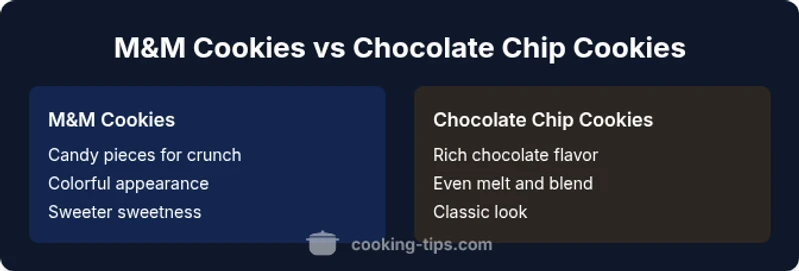
According to Cooking Tips, are m&m cookies the same as chocolate chip? Not exactly. While both start from a classic dough, M&M cookies include candy-coated pieces that shift sweetness, texture, and color. This quick comparison then explains the key differences in flavor, melting behavior, and appearance so you can decide which version suits your bake and audience.
Are M&M cookies the same as chocolate chip cookies?
At first bite, many home bakers wonder whether M&M cookies are simply chocolate chip cookies wearing a colorful coat. The quick answer, rooted in ingredient choices and baking behavior, is: they are not the same cookie, though they share a dough base and similar techniques. According to Cooking Tips, the candy pieces in M&M cookies introduce distinct sweetness, texture, and visual appeal that change the overall experience. In this section and the following, we’ll unpack the science behind the similarities and differences, so you can decide which version fits your audience—whether a school bake sale, a family treat, or a weekend project. The Cooking Tips team emphasizes practical testing and observation to guide decisions for home cooks.
Beyond the obvious candy coating, the presence or absence of chocolate chunks or candy variations can influence how a dough bakes, spreads, and browns. If you’re aiming for a classic, chocolate-forward profile, traditional chips often win. If you want color, crunch, and a playful mood, M&M pieces offer a different kind of appeal. This section sets the stage for a deeper dive into ingredients, flavors, and baking behaviors. By understanding these factors, you’ll be able to tailor your recipe to the occasion and your guests’ preferences.
Ingredients and Candy: What's in Each Cookie?
The foundation of both cookies is a similar dough: flour, sugar, butter, eggs, vanilla, salt, and leavening agents. The divergence comes with candy pieces and chocolate. Chocolate chip cookies rely on chocolate chips that soften and melt during baking, integrating into the dough and often amplifying chocolate flavor as they spread. M&M cookies substitute some or all of the chips with candy-coated M&M pieces. Those colorful shells stay intact during baking in many recipes, adding visual interest and a predictable, sugary crunch that remains even after cooling.
Other ingredients can influence outcomes as well. For example, using more brown sugar can yield a chewier cookie with deeper caramel notes, while white sugar tends to produce crisper edges. Some bakers also adjust the dough's moisture by tweaking butter temperature or egg size. Seasonal or special-edition M&Ms introduce different flavors, from peanut to mint, which can drastically shift the cookie’s character compared to a standard chocolate chip version. In practice, the choice of add-ins—M&M colors, chocolate type, and optional nuts—shapes flavor layers and overall dessert experience.
Flavor Profiles: Chocolate, Vanilla, and Candy Notes
Chocolate chip cookies typically center around a robust chocolate flavor accented by vanilla and a hint of butter. The chip distribution matters: melted chips can create pockets of intense chocolate, while intact chips provide bursts of sweetness. In contrast, M&M cookies introduce a candy shell that delivers a subtle candy sweetness and bright, fruity, or nutty notes depending on the M&M variant. The chocolate center of many M&M candies can offer a secondary chocolate presence, but the outer candy shell often keeps its textural integrity, providing a contrasting bite that is distinctly different from plain chips.
Taste perception is also affected by the dough’s balance. If the dough emphasizes brown sugar, you’ll encounter deeper caramel tones alongside the candy sweetness. If you go with more granulated sugar, expect crisper edges and a lighter mouthfeel. In short, M&M cookies tend to skew toward a sweeter, more playful flavor profile with a visually dynamic surface, while classic chocolate chip cookies emphasize chocolate intensity and a more uniform flavor throughout." ,
Texture and Mouthfeel: Crunch, Chew, and Candy Coating
Texture is where these cookies diverge most noticeably. Chocolate chip cookies often present a chewy interior with a slightly crisp rim, especially when made with a balanced ratio of brown to white sugar. The chips themselves can soften and blend into the dough as they melt, creating a smooth chocolate center in some bites and a more textural contrast in others.
M&M cookies add another dimension: the candy shells tend to stay crisp longer, contributing a crunch that remains detectable even after cooling. Depending on the recipe and candy size, you may experience a layered texture—soft dough, softly melted chocolate cores near the center, and a percussive crunch from the M&M shells in every bite. If you prefer a cookie with a strong snap, you can adjust sugar ratios or bake times accordingly; if you want a more consistent chew throughout, a higher moisture dough and a shorter bake may achieve that without sacrificing the candy component.
Baking Chemistry: How Dough Composition Affects Spread
Baking is a chemistry experiment. The presence of candy in M&M cookies can influence spread, surface browning, and moisture retention. Candy coatings create microstructures that resist full integration into the dough, which can help the cookie hold shape and maintain colorful specks even as the surface browns. In contrast, chocolate chips typically melt and re-solidify within the dough’s matrix, contributing to uniform chocolate distribution and a smoother surface.
Dough moisture, fat content, and leavening all interact with these inclusions. A dough with higher moisture and fat tends to spread less and stay thicker, which can help preserve the candy’s visibility. Bakers who want flatter cookies with more spread may increase sugar or reduce chill time. Understanding these interactions is key when you decide between M&M and chocolate chip approaches, especially if you bake cookies frequently for a crowd with varying preferences.
Color, Visual Appeal, and Festive Potential
Color influences appetite and mood. M&M cookies bring a bright, party-like appearance due to multicolored pieces that catch attention even before people bite in. This makes them excellent for celebrations, kids’ parties, or themed gatherings where the cookie itself acts as a decorative element. Chocolate chip cookies, with their earthy brown tones and glossy chocolate glints, convey a more classic, homey vibe. The decision often hinges on event context: for a festive display or giftable treat, M&M cookies offer eye-catching appeal; for a pantry staple or traditional dessert, chocolate chips deliver timeless flavor.
Texture and color together inform perception. A cookie that looks exciting but tastes flat may disappoint, while a more subdued appearance can be forgiven if the chocolate flavor is peak. The best path is to align the cookie’s look with the intended experience—playful and colorful or classic and chocolate-forward.
Variations and Customizations
Both cookie types lend themselves to a wide range of modifications. For M&M cookies, you can swap in different candy varieties (seasonal, mint, peanut) to echo holidays or flavors, or adjust the candy-to-dough ratio to alter crunch. For chocolate chip cookies, experimenting with chip size (mini versus large chunks), types of chocolate (semi-sweet, dark, milk), or even a mix of chips and chunks can dramatically shift a recipe’s character. Nuts, oats, or a drizzle of espresso powder can further accentuate flavor depth in either version.
A practical strategy is to start with a trusted base recipe, then test a few variants in small batches. Record outcomes in a kitchen notebook—note candy type, chocolate size, and bake time. This approach helps you reproduce a preferred texture and flavor profile consistently, whether you’re baking for family dinners or a door-to-door bake sale.
Practical Tips for Baking the Right Version
When aiming for a reliable cookie, a few practical steps help ensure success. Chill the dough to reduce spread and preserve candy pieces’ visibility, particularly for M&M cookies. Use parchment or a silicone mat to promote even browning and prevent sticking. For M&M cookies, consider adding the candy pieces after the dough is mixed to minimize crushing the shells. When using standard chips, choose a chocolate that matches your taste preference and adjust the dough’s moisture to balance sweetness.
Don’t forget about temperature and timing. An oven that runs hot or unpredictable could burn edges while leaving centers underdone. If you’re baking with kids or beginners, start with a small batch and use a timer to monitor color rather than rely solely on texture cues. Finally, store cookies in an airtight container away from humidity to preserve texture and color—M&M shells can lose their crispness if moisture creeps in.
Common Myths Debunked
Myth: M&M cookies always taste just like chocolate chip cookies. Reality: flavor profiles diverge due to candy sweetness and shell texture, even when the dough is the same. Myth: Chocolate chips always melt completely and create a uniform chocolate center. Reality: chips often hold their shape and contribute pockets of melted chocolate, but not always to the same degree as candy fragments.
Common misperception also includes the notion that both cookies bake identically. Baking times, sugar ratios, and even the type of chocolate or candy can lead to noticeable differences in spread, browning, and chew. The practical takeaway is to treat each cookie style as its own recipe, with tweaks to sugar balance, fat, and candy amount to achieve the desired result.
Quick Reference: When to Choose Each Cookie Type
Ask yourself who you’re baking for. If you want a visually playful treat for kids or a party display, M&M cookies are a strong choice due to their candy accents and color. If your priority is a deep chocolate flavor and a more traditional cookie, go with chocolate chip. For a mixed crowd, you can even bake a seed batch of each type to compare, or tailor a single dough that alternates chocolate and candy chunks within a single sheet.
In all cases, start with a trusted base recipe, then adjust for candy ratio or chip size to reach your preferred texture and flavor. The goal is to align the dessert with the occasion, whether that means more crunch, more chocolate intensity, or a balance between sweetness and candy sweetness.
Comparison
| Feature | M&M Cookies | Chocolate Chip Cookies |
|---|---|---|
| Main Ingredient/Candy | Candy-coated M&M pieces | Chocolate chips (melt-in) |
| Texture Profile | Crunchy candy bits with chewy dough | Chewy interior with melted chips and glossy edges |
| Flavor Emphasis | Candy sweetness, vanilla, and candy center notes | Chocolate-forward with browner sugar caramel notes |
| Color and Appearance | Bright, multicolor specks | Classic brown with visible chips |
| Baking Behavior | Candy shells resist complete melting, hold shape | Chips melt into dough; chips may blend with surface |
| Best For | Festive occasions, kids’ parties | Classic chocolate flavor lovers |
Benefits
- Colorful, festive appearance that appeals to kids
- Adds crunch and texture variety beyond plain chips
- Easy to customize with different candy varieties
- Can be a playful or themed dessert option
- Can be used for gifts or party favors
Cons
- Candy pieces can occasionally melt or heat unevenly
- Candy shells may become soft in humid environments
- Generally more expensive due to candy inclusions
- Flavor can be perceived as sweeter due to candy sweetness
- Texture can be inconsistent if candy distribution is uneven
M&M cookies are not the same as chocolate chip cookies; they differ in candy inclusion, texture, and color, so choose based on the occasion and flavor target.
M&M cookies offer a colorful, crunchier texture with candy sweetness, while chocolate chip cookies emphasize chocolate flavor and a smoother chew. For parties or kids’ events, M&M cookies excel; for a classic chocolate-forward dessert, chocolate chip cookies shine. The Cooking Tips team recommends selecting based on visual appeal and preferred flavor intensity.
Quick Answers
Are M&M cookies simply chocolate chip cookies with candy pieces?
Not exactly. Both share a dough base, but candy inclusions in M&M cookies create distinct sweetness, texture, and color that set them apart from traditional chocolate chip cookies. The difference is not merely aesthetic; the candy changes how the cookie feels and tastes as you bite into it.
Not exactly. They share a dough base, but the candy pieces make M&M cookies sweeter and crunchier in a way chocolate chips don’t.
Do M&M cookies taste the same as chocolate chip cookies?
They do not taste the same. Chocolate chips offer a deep chocolate flavor and a smooth melt, while M&M pieces add candy sweetness and a crisp, sugary bite from the shells. The overall flavor balance shifts with the type of chocolate or candy used.
No, they don’t taste the same; candy shells add sweetness and crunch that changes the overall flavor.
Which cookie bakes best for a school event?
For school events, M&M cookies often win for visual appeal and kid-friendly color, but chocolate chip cookies may be easier to bake in large batches with fewer variables. Consider your audience and any nut or color sensitivities when deciding.
M&M cookies are great for color-and-fun, while classic chips are simpler for big batches.
Can I substitute M&Ms for chocolate chips in my recipe?
You can substitute, but expect changes. M&Ms add sweetness and crunch; chocolate chips melt differently. If you substitute, keep an eye on moisture and bake time to maintain desired texture.
Yes, but the texture and melt will differ; adjust bake time and moisture accordingly.
How do M&M cookies behave when baked?
M&M cookies tend to retain more of their color and candy texture, with candy pieces providing occasional crunch. They may spread less than dough with plain chips, depending on the sugar balance and fat content.
Candy pieces stay visible and add crunch; they can spread a bit differently than plain chips.
What’s a quick tip to get both types right in one batch?
Use a base dough common to both, then split the batch. Add M&Ms to one portion and chips to the other, adjusting sugar and butter to balance moisture. Bake a small test sheet before full-scale production.
Split the dough, add different add-ins, and test bake small batches first.
Top Takeaways
- Choose based on occasion and audience
- Expect candy pieces to affect texture and color
- Adjust dough to control spread and chewiness
- Experiment with candy types for seasonal variants
- Store cookies properly to preserve texture and color