How to Cook Quinoa: A Practical Guide for Perfect Fluff
Learn how to cook quinoa perfectly with rinsing, proper ratios, and flavor boosts. This step-by-step guide for home cooks covers methods, troubleshooting, and serving ideas to make quinoa a reliable staple.


By the end, you’ll know how to cook quinoa to fluffy, nutty grains using rinsing, the right water ratio, and a simple simmer. This guide also answers common questions like who do you cook quinoa best and what tweaks help with flavor and texture. Ready to cook quinoa perfectly every time? Let’s start.
Why Quinoa Is a Quick-Cooking Powerhouse
Quinoa is celebrated in home cooking for its short, predictable cooking time and its versatility across meals. For many, the question becomes not just how to cook quinoa, but who do you cook quinoa in a way that consistently delivers light, fluffy grains with a nutty aroma. The key is understanding two things: rinse and ratio. Quinoa’s outer coating, saponins, can add a bitter edge if not removed. When you rinse, you reduce this risk and reveal the grain’s delicate, creamy interior. Beyond flavor, quinoa offers protein and fiber that fit neatly into busy weeks, from quick bowls to meal prep lunches. Cooking Tips recommends starting with a simple rinse and a steady simmer to build confidence before experimenting with toppings or broths. An important note is to keep foods simple at first; you can always layer in flavors later.
The Right Essentials: Rinse, Toast, and Measure
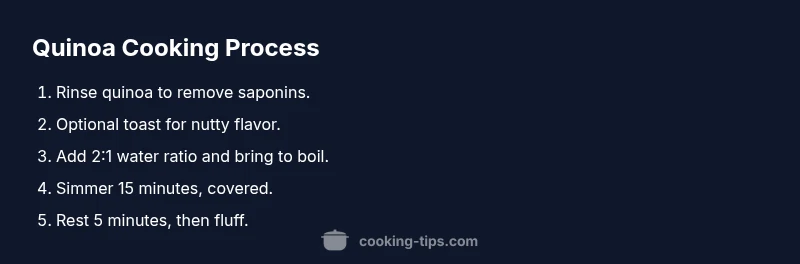
The first step in any reliable quinoa routine is to rinse. A fine-mesh sieve under cold running water removes the bitter saponins that can cling to the grain. Rinsing also helps prevent foam from building up during cooking. Optional toasting the quinoa in a dry pan for 2 minutes can deepen nuttiness and aroma, particularly when you plan to serve it warm with savory toppings. Measuring the grains accurately matters too: 1 cup dry quinoa generally yields about 3 cups cooked. Keep a dedicated measuring cup to avoid cross-contamination of flavors from other grains. If you’re using a stock or broth, consider how salt in the liquid will affect the final salt level of the dish.
Water Ratios and Cooking Method: The 2:1 Rule
A reliable baseline for stovetop quinoa is a 2:1 water-to-quinoa ratio, but slight adjustments may be needed based on the pot and heat level. Bringing water to a full boil before adding the quinoa ensures the grains begin cooking evenly. After adding quinoa, return to a gentle boil, then reduce to a steady simmer, cover, and cook for about 15 minutes. Do not lift the lid during the simmering phase to preserve steam and even cooking. If you notice the liquid drying up before 15 minutes, add a splash of hot water rather than cold water to avoid shocking the grains. The Cooking Tips team emphasizes consistency; the more you practice, the more you’ll master the timing that yields tender, separate grains.
Rinse Mastery: Why Rinsing Matters for Bitterness
Saponins on quinoa’s coating can cause a bitter, soapy taste if not rinsed away. A thorough rinse under cool running water for 1-2 minutes helps remove these compounds and reduces foaming. For best results, shake the sieve to dry the grains a bit before cooking and avoid pouring wet quinoa straight into hot water, which can cause uneven absorption. If you’re cooking frequently, you might rinse quinoa in bulk and store it dried in an airtight container to save time during busy weeks. Remember, patience with a proper rinse pays off in a cleaner, more appetizing base.
Cooking Methods: Stovetop, Microwave, and Instant Pot
Quinoa adapts to several practical methods. On the stove, the 2:1 ratio with a simmered cover is classic. In the microwave, combine rinsed quinoa and water in a microwave-safe bowl, cover, and cook in 2-3 minute bursts until the liquid is absorbed. In an Instant Pot or pressure cooker, use a 1:1.25 ratio of quinoa to water and set for 1 minute at high pressure, followed by a natural release. Each method has its perks: stovetop offers control, microwaving is quick, and pressure cooking is hands-off. Your choice should depend on your schedule and equipment, but the outcome—fluffy grains—remains the same. The key is letting the quinoa rest briefly after cooking before fluffing.
Fluff, Rest, and Texture: Getting Perfect Grains
Once cooking is complete, remove quinoa from heat and let it rest, covered, for 5 minutes. Resting allows the steam to finish the absorption and prevents clumps. After resting, fluff gently with a fork to separate the grains rather than mashing them. If you’re aiming for ultra-light texture, a quick, light toasting of the dry quinoa before cooking can promote separation of grains. This step is especially helpful when quinoa is the base for salads or bowls where you want distinct, not mushy, grains.
Flavor Upgrades: Salts, Broths, and Mix-ins
Boost quinoa flavor by cooking with a light-salted broth instead of water, or add aromatics such as garlic, onion powder, or lemon zest to the cooking liquid. You can fold in chopped herbs, roasted vegetables, or a splash of olive oil after fluffing for a bright, savory dish. For a sweeter take, toss quinoa with cinnamon, vanilla, and dried fruit after cooking for breakfast bowls. Be mindful of salt levels if you choose broth; taste once and adjust with a pinch of salt at the end if needed.
Practical Serving Ideas: Bowls, Salads, and Sides
Quinoa shines in a wide range of meals. Use it as a base for protein bowls with roasted vegetables, chickpeas, and a drizzle of tahini. It also makes a hearty addition to salads, pairing well with cucumbers, tomatoes, and feta. Quinoa can stand in for rice or couscous in many sides, offering a nutty texture that complements grilled vegetables or citrusy dressings. When prepping ahead, portion cooked quinoa into airtight containers and refrigerate up to 4-5 days. Freezing is also an option for longer storage.
Troubleshooting Common Quinoa Problems
If quinoa turns out soggy, you may have used too much liquid or simmered too long. If it’s dry and granular, check your heat and ensure you’re not immediately removing the cover too early. Always start with a rinse; the bitter coating compounds can otherwise ruin a dish. If your quinoa clumps, try fluffing with a fork while the grains are still warm to separate them. For persistent foaming, lower the heat slightly and remove the lid briefly to let the excess foam escape before resuming cooking.
Authority Sources and Further Reading
For more detailed guidance and authoritative information on quinoa, consider reviewing the following sources:
- https://www.usda.gov
- https://www.myplate.gov/eat-healthy/grains
- https://www.hsph.harvard.edu/nutritionsource/food-features/quinoa/
Tools & Materials
- measuring cup(Use 1 cup dry quinoa measurement per batch; scale up as needed.)
- fine-mesh sieve(Rinse quinoa under cold running water to remove saponins.)
- medium saucepan with lid(Prefer wide-bottom pan for even cooking.)
- fork for fluffing(Use to separate grains after resting.)
- vegetable broth or stock (optional)(Substitute water for richer flavor; adjust salt accordingly.)
Steps
Estimated time: 15-20 minutes
- 1
Rinse the quinoa
Place quinoa in a fine-mesh sieve and rinse under cold running water for 1-2 minutes. Swish the grains with your hand to scrub off surface saponins. Drain thoroughly before cooking; this prevents bitterness and foaming during simmering.
Tip: Rinse thoroughly and shake off excess water to ensure straight grains. - 2
Optional: Toast for nuttiness
Heat a dry saucepan over medium heat, add rinsed quinoa, and toast for 2 minutes until fragrant. Stir occasionally to prevent scorching. Toasting deepens flavor and helps the grains stay separate after cooking.
Tip: Keep a close eye—toast can quickly go from nutty to burnt. - 3
Add water and bring to boil
Add 2 cups of water per 1 cup quinoa and bring to a rolling boil. A wide-bottom pan helps even heating and prevent clumping. Do not skip rinsing; it ensures a clean flavor base.
Tip: Use hot water to avoid long pre-heat times and keep cooking predictable. - 4
Simmer covered until absorbed
Cover, reduce heat to a gentle simmer, and cook for about 15 minutes. Do not lift the lid during cooking to keep the steam in. If you notice liquid still present near the end, let it sit a minute longer off heat.
Tip: Avoid peeking; steam is essential for fluffy grains. - 5
Rest and fluff the quinoa
Turn off the heat and let quinoa rest, covered, for 5 minutes. Then fluff with a fork to separate the grains. Resting completes absorption and prevents mushy texture.
Tip: Fluffing while warm helps grains separate better. - 6
Season and serve
Season with salt to taste or finish with a drizzle of olive oil and lemon zest. Serve warm in bowls, salads, or as a side. Leftovers store in the fridge for 4-5 days and reheat well.
Tip: Add herbs or lemon juice after reheating to brighten flavor.
Quick Answers
Do you need to rinse quinoa every time?
Rinsing removes surface saponins and reduces bitterness. For most quinoa recipes, a thorough rinse is recommended.
Yes. Rinse each batch to remove the bitter coating before cooking.
What is the ideal water ratio for quinoa?
A common baseline is 2 parts water to 1 part quinoa. Adjust slightly based on your pot and heat, aiming for a tender, separate grain.
Mostly 2:1, but you can tweak a little depending on your setup.
Can I cook quinoa in vegetable broth?
Yes, cooking quinoa in vegetable broth adds flavor. Just reduce salt in the liquid to avoid oversalting.
Yes—broth adds flavor, just watch the salt level.
How can I fix overcooked quinoa?
If overcooked, spread quinoa on a tray to cool and separate the grains, then fluff gently. A little moisture can be absorbed by resting longer.
Spread it out and fluff to help restore texture.
How long does quinoa last in the fridge?
Cooked quinoa keeps for about 4-5 days in a covered container in the fridge. Freeze for longer storage if needed.
About 4-5 days in the fridge.
Is quinoa gluten-free?
Quinoa is naturally gluten-free, but check processing to avoid cross-contamination if you have celiac disease.
Yes, naturally gluten-free, but beware cross-contamination.
Watch Video
Top Takeaways
- Rinse to remove bitterness and foaming
- Use a reliable 2:1 water ratio for fluffy grains
- Let quinoa rest 5 minutes before fluffing
- Flavor with broth or aromatics for variety
- Store leftovers in the fridge for up to 4-5 days