How Long to Cook a Ham: Timelines by Weight and Method
Learn precise ham cooking timelines by weight and method, including bone-in vs boneless, reheating fully cooked ham, glazing tips, and safety temperatures for reliable results.


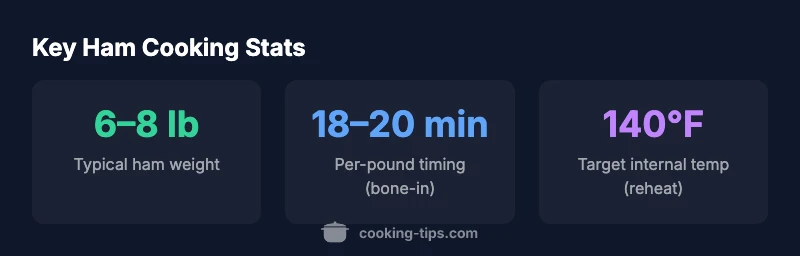
How long to cook a ham depends on whether it’s bone-in or boneless and whether you’re reheating a fully cooked ham or cooking raw. For a fully cooked bone-in ham, reheat at 325°F for roughly 18-20 minutes per pound until the internal temperature reaches 140°F. Boneless hams usually finish a bit faster, around 15-18 minutes per pound, since the meat is more uniform. Always verify with an accurate thermometer to avoid overcooking.
How long to cook a ham: bone-in vs boneless
When deciding how long to cook a ham, start by identifying whether you have a bone-in or boneless cut and whether you are reheating a fully cooked ham or cooking an uncooked one. In home ovens set to 325°F, a fully cooked bone-in ham typically requires about 18-20 minutes per pound to heat through to a safe 140°F. Boneless hams usually cook a bit faster, around 15-18 minutes per pound, since the meat is more uniform and heat penetrates evenly. These times are general guidelines and can shift with oven performance, pan shape, and whether the ham is covered or uncovered. For best results, begin checking doneness near the lower end of the range with a reliable digital thermometer and aim for a final internal temperature in the 140°F range after a brief rest. Beyond timing, factors such as glazing, resting, and slicing influence juiciness just as much as the clock.
Starting from raw vs reheating: what's different
If you start with a raw ham, plan on a longer cooking session and rely on a thermometer rather than the clock for accuracy. Raw hams must reach safe pork temperatures according to current guidelines, typically around 145°F with a brief resting period. Reheating a fully cooked ham, by contrast, is primarily about warming the meat through without overcooking, so the per-pound times are shorter and easier to manage. A common approach is to remove packaging and netting, pat the surface dry, and place the ham fat-side up on a rack or in a shallow roasting pan. Covering lightly with foil helps retain moisture, especially for larger cuts. When you’re ready to glaze, apply during the final 20–30 minutes, then return to heat until the glaze sets. By keeping these two modes distinct, you’ll avoid overcooking while achieving even heating and a juicy texture.
Temperature and safety: internal temperature targets
Temperature is king when cooking ham. For reheating fully cooked ham, aim for an internal temperature of 140°F as you remove it from the oven, then let it rest so carryover cooking finishes the job. If you are cooking an uncooked or partially cooked ham, follow package directions; many raw hams reach around 145°F with a rest to ensure safety and tenderness. Always insert the thermometer into the center of the thickest portion, avoiding bones for bone-in cuts. Keep in mind that cooking times above are guidelines, not guarantees, because a hot oven can push times in different directions and rest periods add extra minutes. Taking accurate readings with an instant-read thermometer helps ensure food safety without sacrificing juiciness.
Step-by-step timing by weight
To estimate timing precisely, start with the ham’s weight and type. For a 6–8 pound bone-in ham that is fully cooked, plan roughly 18–20 minutes per pound, then verify with a thermometer and remove from heat at the lower end of the range. For a 6–8 pound boneless ham, plan around 15–18 minutes per pound, checking early and often. If your ham is larger or smaller, adjust time by roughly 8–10 minutes per additional pound for bone-in cuts and 6–8 minutes per extra pound for boneless. A practical method is to compute total time, then set a timer and test when you’re halfway through. Finally, always check for the target internal temperature (140°F for reheating fully cooked ham) and let the meat rest before carving.
Common methods: oven, glaze, and pan setup
The conventional route for ham is roasting in a standard oven at 325°F. For moisture, you can bake the ham covered for the first portion, uncover during the glaze phase, and finish uncovered to color the outside. Glazing is optional but popular; apply glaze in the last 20–30 minutes and bubble until glossy. If you want crisper edges or a more dramatic crust, place the ham on a rack above a shallow pan so fats drip away, and consider basting periodically. Some cooks wrap the ham in parchment for extra protection, then transfer to a uncovered roast for browning. Each approach shifts finish time slightly, but thermometer readings keep you on track.
Practical tips to prevent overcooking
- Use a probe thermometer and monitor early in the window, starting checks toward the bottom of the time range. - Let the ham rest for 10–15 minutes after removing from heat to redistribute juices and improve slicing. - If the surface browns too quickly, tent loosely with foil to protect the glaze and moisture. - Glaze late in the process to avoid burning and overly sweet flavors. - If you encounter variation between racks or pans, rotate the meat halfway through for even heating.
Common mistakes and how to avoid them
- Relying solely on clock time rather than a thermometer leads to dry or underheated ham. Invest in a reliable probe thermometer. - Cooking from frozen is unpredictable; thaw fully for best texture and even heating. - Leaving packaging or netting on can trap heat or block flavor; remove before roasting. - Forgetting to rest the meat means juices spill out when you cut; rest before carving to preserve moisture and tenderness.
Cooking timelines by ham type
| Category | Cook time per pound | Total time range | Target internal temp |
|---|---|---|---|
| Bone-in (reheat) | 18-20 min | Depends on weight | 140°F |
| Boneless (reheat) | 15-18 min | Depends on weight | 140°F |
Quick Answers
How long to cook a ham per pound?
Times vary by bone-in vs boneless and whether you’re reheating or cooking raw; bone-in fully cooked reheating ~18-20 minutes per pound, boneless ~15-18 minutes per pound. Always verify with a thermometer.
Times depend on bone-in vs boneless and whether you’re reheating or cooking raw; use a thermometer for best results.
Can I cook a ham from frozen?
Thaw fully before roasting; cooking from frozen adds time and can lead to uneven doneness. Plan extra time and monitor with a thermometer.
It’s best to thaw the ham first; cooking from frozen isn't recommended.
Should I glaze ham during cooking?
Glazing is typically added in the last 20–30 minutes and returned to heat until glossy. Glazing earlier can cause burning or overly sweet flavors.
You usually glaze in the last part of cooking for best shine.
Is 140°F the right internal temperature for reheated ham?
Yes, for reheating fully cooked ham, 140°F is the target. Raw ham uses higher temperatures and longer rest times to finish cooking.
Yes—140°F is the target for reheated ham.
How long should ham rest after cooking?
Rest 10-15 minutes after cooking to redistribute juices and improve carving.
Let it rest about 10-15 minutes before carving.
“Precise timing matters, but a reliable thermometer is the best guide for ham; let temperature dictate the finish and rest completes the juiciness.”
Top Takeaways
- Follow bone-in vs boneless timing as your first guide
- Reheat to 140°F and rest before carving
- Always verify with a thermometer; avoid clock-only cooking
- Glaze in the final phase to avoid burning
- Adjust time based on weight and oven performance