How Long to Cook Bacon in the Oven: A Complete Guide
Learn exact oven times for bacon across thicknesses, plus temps, prep tips, and troubleshooting for perfectly crisp results every time.


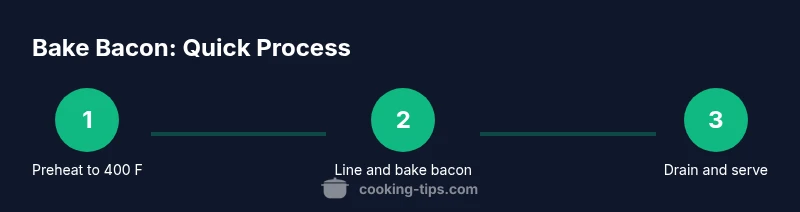
To bake bacon in the oven, preheat to 400 F (205 C) and bake for 12-15 minutes for thin-cut, 15-20 minutes for regular-cut, or 20-25 minutes for thick-cut. Start checking at the minimum time to avoid overcooking, then remove and drain on paper towels for crisp results.
Why Oven Bacon Is a Reliable Method
Baking bacon in the oven is a reliable method because it uses steady heat and minimizes grease splatter. It lets you cook many slices at once without babysitting the pan, and it renders fat more gradually, which can yield crisper edges. According to Cooking Tips, oven-based bacon also tends to be less greasy than pan-frying since excess fat drains away onto a lined sheet. For busy mornings or crowd meals, this method shines when you need consistent results with minimal effort. The key is a preheated oven and a single, non-overlapping layer of bacon so every slice cooks evenly.
In practice, oven baking reduces the risk of uneven cooking that can happen on the stovetop, especially when browning a large batch. You can control the browning level by adjusting time and the thickness of the slices. With a reliable setup, you get predictable results and less cleanup afterward, which is a big advantage for home cooks balancing multiple tasks.
Gather Your Tools and Ingredients
Before you start, assemble what you need for a clean, efficient bake. A rimmed baking sheet is essential to catch fat and prevent spills. Line it with parchment paper or aluminum foil for easy cleanup. A wire cooling rack is optional but can help fat drain away from the bacon, yielding crisper edges. Have tongs handy to turn slices if needed and paper towels to blot excess fat after cooking. Keep in mind that the quality of the bacon matters; choose slices with even thickness for uniform crisping. Finally, an oven thermometer can help verify accuracy if your oven tends to run hot or cool.
Tip: Keep a small bowl of cold water nearby to quickly cool the pan if you need to dampen a flare of smoke. Clean, organized prep reduces stress after you start cooking.
Preheating and Pan Prep for Even Crispiness
Begin by preheating the oven to 400 F (205 C). A fully heated oven ensures quick, even browning and reduces the risk of soggy bacon. While it heats, line the rimmed baking sheet with parchment or foil so cleanup is minimal. If you have a baking rack, place it on the sheet to elevate the bacon; this allows fat to run off the slices and creates a crisper result. If you don’t have a rack, arrange the slices directly on the lined sheet in a single layer with small gaps between pieces.
Why it matters: Starting with a hot, prepared surface and avoiding crowding ensures the bacon cooks evenly from edge to center and doesn’t steam under crowded weight. Small adjustments here dramatically affect final texture.
Thickness Matters: Regular vs Thick-Cut Bacon
Bacon thickness plays a major role in cooking time. Thin-cut bacon crisps quickly and can go from perfect to burnt in a minute, while regular-cut bacon needs a bit longer for even rendering. Thick-cut bacon requires even more time to reach the same level of crispness. For best results, select slices that are uniform in thickness within the package and plan your bake time accordingly. If you mix thicknesses on the same sheet, expect uneven results and adjust by separating them onto different pans or rows.
A practical approach is to separate slices by thickness and consider cooking them in separate batches if your sheet space is limited. This ensures each slice gets adequate heat exposure.
Temperature Tips: Ideal Oven Temps for Crisp Bacon
Most home cooks find 400 F (205 C) to be a sweet spot for crispness without burning. Some chefs prefer a slightly lower heat (375 F / 190 C) for longer, slower rendering, which can yield very uniform results with less risk of over-browning. If you’re using a convection oven, you may shave a couple of minutes off the standard bake time, but keep an eye on the bacon to prevent overheating. In any case, preheating is essential, as is leaving space between slices so air can circulate freely around each piece.
Remember: Every oven is different. If your oven tends to run hot, start checking earlier than the minimum times and adjust for future batches. A tiny difference in temperature can change the crispness level noticeably.
Time Guidelines: How Long to Cook Bacon in Oven
Time varies with thickness and oven type. In a standard oven set to 400 F (205 C): thin-cut bacon typically takes 12-15 minutes, regular-cut 15-20 minutes, and thick-cut 20-25 minutes. If you prefer very crispy edges, you can add 1-2 minutes, but watch closely to avoid burnt tips. For convection ovens, reduce the time by about 2-4 minutes, depending on how aggressively your model circulates air. When in doubt, check at the lower end of the range and continue cooking in short increments.
Cooking Tips analysis shows that oven cooking tends to produce evenly browned slices with consistent texture across a batch, especially when slices are arranged without overlap.
Monitoring Doneness: Visual Cues and Safe Handling
Crisp bacon displays rich color and firm texture with minimal bend. The fat should be opaque and mostly rendered; edges become golden brown and crisp. Avoid removing bacon the moment it colors; give it a few seconds to firm up after removal from heat. Use tongs to transfer the slices onto a paper towel-lined plate to blot excess fat. If you prefer extra crisp, a quick one-minute broil at the end can help, but keep a close watch to prevent scorching.
For safety and quality, let the slices rest for about a minute before serving; this allows the fat to settle and the bacon to finish crisping a touch off the heat.
Convection vs Conventional Oven: Does It Change Cooking Time?
Convection can speed up cooking because hot air circulates around the food. If you bake with convection, start with the same sheet and thickness guidelines but check a minute or two earlier. You may reduce the total time by about 2-4 minutes depending on your oven and the bacon thickness. If your convection oven runs particularly aggressively, you might need even less time. The key is to monitor the slices closely through the first batch to calibrate for future cooks.
In general, you can achieve excellent results with both modes; use convection as a time-saver when you need crisp, quick outputs, especially for thin-cut bacon.
Variations: Baking Frozen Bacon, Layering, and Extra-Crisp Edges
Cooking bacon from frozen is possible but requires longer bake times and careful monitoring to avoid uneven texture. You’ll likely need an additional 5-8 minutes beyond the standard times, and you should plan for slightly more fat release, potentially increasing smoke risk. Layering multiple rows of bacon tightly can lead to uneven crisping; separate the slices as much as possible or bake in batches. For extra-crisp edges, finish with a brief 1-minute broil, then remove immediately to prevent burning. Always drain on paper towels and let rest briefly.
Tip: If using thick-cut bacon, consider starting at 375 F (190 C) to promote rendered fat before finishing at 400 F (205 C) for final browning.
Resting, Storing, and Reheating Leftover Bacon
Resting is simple: let the baked bacon sit on a rack or a plate lined with paper towels for 1-2 minutes. This step allows any remaining fat to drain and the bacon to crisp as it cools. Store leftovers in an airtight container in the refrigerator for up to 4-5 days. Reheat in a 350 F (175 C) oven for 5-8 minutes, or crisp on the stovetop in a dry skillet over medium heat for 1-2 minutes per side. Reheating in the oven preserves texture better than microwaving, which can make bacon rubbery.
mainTopicQuery_placeholder
Tools & Materials
- Baking sheet with rim(A standard sheet pan is essential to catch fat and prevent spills.)
- Parchment paper or aluminum foil(Line the pan for easy cleanup and nonstick release.)
- Wire cooling rack (optional)(Elevates bacon for fat drainage and crisper edges.)
- Tongs(For safe, quick turning and transferring slices.)
- Paper towels(Blot excess fat after cooking.)
- Oven thermometer (optional)(Helps verify oven accuracy if yours tends to run hot or cool.)
Steps
Estimated time: 25-35 minutes
- 1
Preheat oven
Preheat the oven to 400 F (205 C) and let it reach full temperature before placing the bacon inside.
Tip: A fully heated oven ensures even browning from edge to edge. - 2
Prepare pan
Line a rimmed baking sheet with parchment or foil to catch fat and prevent sticking.
Tip: Line the sheet first to simplify cleanup after cooking. - 3
Arrange bacon
Place bacon in a single layer, leaving small gaps between slices for air circulation.
Tip: Overlapping slices will steam rather than crisp. - 4
Bake and monitor
Bake for 12-15 minutes (thin-cut), 15-20 minutes (regular-cut), or 20-25 minutes (thick-cut); start checking at the minimum time.
Tip: If your slices seem very thin, check early to avoid burning. - 5
Drain and blot
Remove from oven with tongs and transfer to paper towels to drain fat.
Tip: Crucial for crisp texture; too much residual fat can soften edges. - 6
Optional extra crisp
If you want extra crispness, broil for 1 minute, watching closely.
Tip: Watch like a hawk; a minute can make or break the result. - 7
Rest briefly
Let the bacon rest on a rack or paper towels for 1-2 minutes before serving.
Tip: Resting finishes crisping and makes it easier to handle. - 8
Store or reheat
Store leftovers in an airtight container in the fridge for up to 4-5 days; reheat in 350 F oven for 5-8 minutes.
Tip: Reheating in the oven preserves texture better than microwaving.
Quick Answers
What temperature is best for oven-baked bacon?
Most homes bake at 400 F (205 C) for a good balance of crispness and even browning. Convection ovens may require slightly less time, so adjust accordingly.
The typical oven temperature to bake bacon is 400 F. If you use a convection oven, check a bit earlier as it cooks faster.
How long do you bake bacon at 400 F?
Thin-cut bacon usually takes 12-15 minutes, regular-cut 15-20 minutes, and thick-cut 20-25 minutes. Start checking at the minimum time for your preferred crispness.
At 400 F, thin-cut takes about 12-15 minutes, regular-cut 15-20, and thick-cut 20-25. Check early to prevent burning.
Do I need a rack to bake bacon?
A rack helps fat drain away from the bacon and can improve crispness, but it is optional if you don’t have one.
A wire rack is optional but it helps fat drain away for crisper bacon.
How can I prevent bacon from sticking to the pan?
Line the pan with parchment or foil and avoid overlapping slices. A light spray of oil is unnecessary if you use a rack.
Line the sheet and keep slices in a single layer to prevent sticking.
Is oven-baked bacon safer than frying?
Oven baking produces similar crispness with less splatter and easier cleanup, but always handle hot fat carefully and ventilate your kitchen.
Oven cooking reduces splatter and cleanup while delivering crisp results.
Can I bake bacon from frozen?
Yes, but expect longer cook times, typically 5-8 minutes longer, and monitor closely for even rendering.
You can bake frozen bacon by adding a few extra minutes and watching it closely.
Watch Video
Top Takeaways
- Bake bacon on a preheated sheet for even crisping
- Times vary by thickness: thin 12-15, regular 15-20, thick 20-25
- Line the pan and drain fat for crisper results
- Monitor closely and use broil briefly if extra crispness is desired
- Rest and store properly to maintain texture