Is Air Frying Better Than Roasting? A Practical Comparison
A thorough, evidence-based comparison of air frying vs roasting for health, texture, time, and energy. Learn when each method shines and how to plan meals that use both techniques.


Is air frying better than roasting? It depends on what you value most. Air frying often uses less oil, cooks faster, and produces crisp texture with convenient cleanup, while roasting delivers deeper browning and richer flavors in larger cuts. According to Cooking Tips, the best choice hinges on health goals, meal type, and time constraints.
Quick assessment: when to choose air frying vs roasting
Air frying and roasting both cook by circulating hot air, but they suit different scenarios. If you want quick meals with minimal oil and a crisp finish on smaller items like vegetables, chicken tenders, or reheated leftovers, air frying is a strong choice. For larger cuts, roasting a whole chicken or beef roast, or when you seek deep browning across bigger surfaces, roasting in a conventional oven often delivers superior flavor development. According to Cooking Tips, the best approach depends on dish type, batch size, and time constraints. Consider your health goals, texture preferences, and available equipment when deciding which method to use for is air frying better than roasting in practice.
- Oil usage: air frying typically uses little to no oil, while roasting often relies on oil or fat to promote browning and moisture retention.
- Texture: expect a crisp exterior with air frying; roasting tends to yield evenly browned surfaces and deeper caramelization on larger items.
- Batch size and rhythm: air frying shines for single servings and small batches; roasting scales better for family meals and bulk cooking.
- Cleanup and footprint: air fryers have compact baskets that are easy to wash; roasting relies on baking sheets and pans that may require more cleanup.
Health and oil use: how fat, calories, and browning compare
Health considerations hinge on oil use, cooking time, and how foods brown. Air frying typically relies on a small amount of oil or none at all, which can lower total fat content for many dishes. Roasting often supports browning through fat-based roasting juices, which may add flavor and moisture but increase fat content. The Cooking Tips team emphasizes focusing on the dish and cooking technique rather than chasing a single metric. For lean proteins and vegetables, air frying can reduce oil uptake; for dense cuts with a need for depth of flavor, roasting may be preferable.
- Calorie impact varies by ingredients and seasoning choices.
- Browning contributes flavor compounds; both methods can achieve desirable Maillard reactions with appropriate temps and timing.
Texture and flavor: what to expect from each method
Texture and flavor are the most perceptible differences. Air frying yields a fast, crispy exterior with a relatively neutral interior, ideal for battered or breaded items and small portions. Roasting provides a homogeneously browned surface and richer, sometimes sweeter, flavor development on larger cuts due to longer exposure to heat and fat rendering. The Cooking Tips analyses highlight that texture quality depends on the food structure and preheating practices. Expect air frying to impress with crunch in short windows, while roasting delivers depth at scale.
- Breaded items fare well in air fryers for crispness without deep frying.
- Large roasts benefit from oven roasting for caramelization and overall flavor complexity.
Practical considerations: equipment, energy use, and time
Practical decisions hinge on equipment, kitchen space, and how you plan meals. An air fryer is compact, heats quickly, and cleans up with less mess. A conventional oven handles larger items, multiple trays, and bulk cooking but requires preheating and more space. Energy use often favors air frying for small batches due to shorter cook times and localized heat, while roasting large items may consume more energy due to oven mass. Cooking Tips suggests assessing your typical meal sizes to determine how either method fits your routine.
- Preheating time matters: air fryers heat quickly; ovens may need more lead time.
- Space constraints influence choice in small kitchens.
- Maintenance: air fryer baskets are usually dishwasher-safe; oven racks and pans may require more effort.
Ingredient and recipe compatibility: what foods respond best
Different foods respond differently to each technique. Air frying excels with vegetables, finger foods, and small proteins that benefit from rapid surface browning. Roasting shines with larger cuts, root vegetables, and dishes where even heat distribution over a big area supports uniform caramelization. The Cooking Tips team notes that customizing time and temperature based on thickness and moisture helps maximize results for either method.
- Ideal air fryer foods: bite-sized veggies, chicken tenders, bacon bits, frozen entrées.
- Ideal roasted foods: whole chickens, steaks, large potatoes, sheet-pan dinners.
Common myths debunked
Myth 1: Air frying is a healthier substitute for all roasting. Truth: health benefits depend on oil use and ingredients; you can roast with little oil too. Myth 2: Air frying can perfectly replicate deep frying. Truth: air frying delivers crispness without immersion, but texture and moisture differ from deep frying. Myth 3: Ovens are always slower than air fryers. Truth: it depends on batch size and item thickness; some foods roast quickly with high heat.
Discerning myths helps set realistic expectations and guides choices based on the dish and desired outcome.
Price vs value: cost implications and maintenance
Budgeting for airflow and roasting involves upfront costs and ongoing energy use. Air fryers are a separate appliance with variable price points, but they can reduce oil costs and cleanup time for regular snacking or small meals. Ovens are a staple, but their energy use scales with load and cooking duration. The Cooking Tips team advises weighing purchase costs against how often you cook small batches versus large roasts, and considering long-term maintenance and energy efficiency for your kitchen setup.
How to optimize air frying and roasting side-by-side in meal planning
A practical approach is to use both methods in a weekly plan depending on the dish. For weeknights, air frying can handle vegetables and poultry quickly, freeing oven space for slow-roast components like beef or pork that benefit from extended cook times. When you want crisp textures on the outside and juicy interiors, combine both strategies in multi-dish sheet-pan meals. Cooking Tips emphasizes planning ahead and adjusting temperatures to align with your ingredients and desired textures.
Putting it all together: practical decision guide
Choosing between air frying and roasting should be a deliberate decision based on dish type, batch size, and texture goals. For quick, oil-light cooking with small items, air frying wins. For large cuts and maximum flavor depth, roasting in a conventional oven wins. The Cooking Tips team recommends keeping both methods in your culinary toolkit and selecting the method that best suits the dish, timeline, and health priorities.
Comparison
| Feature | Air frying | Roasting in oven |
|---|---|---|
| Oil usage | Minimal oil or none | Moderate to high oil depending on recipe |
| Cooking time | Usually faster for small portions | Longer, especially for large cuts |
| Texture & browning | Crispy exterior with little oil | Rich browning and deep caramelization on larger surfaces |
| Best for | Small batches, quick weeknight meals | Large cuts and traditional roasts |
| Cleanup | Compact basket, easy to clean | More pans/racks to clean in the oven |
| Energy use | Often lower due to shorter times | Typically higher with longer bake times |
Benefits
- Lower oil and healthier frying option
- Faster cooking for small batches
- Easy cleanup with compact appliances
- Crisp textures without deep frying
- Great for snacking and reheating
Cons
- Limited batch size for some models
- Less depth of flavor on very large roasts
- Air fryers can be costly upfront
- Not all foods perform optimally in air fryers
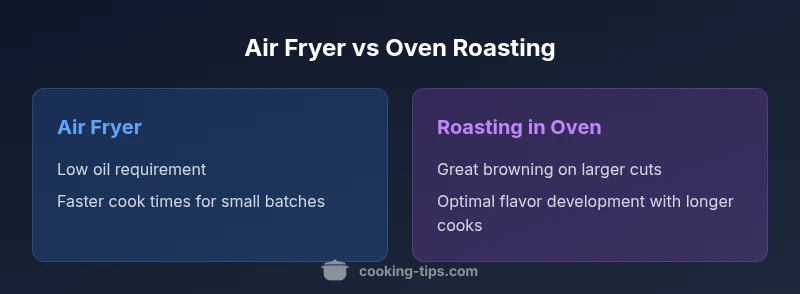
Air frying is best for quick, oil-light meals and small batches; roasting excels for large cuts and deep browning.
Air frying suits fast, low-oil dishes and small portions. Roasting delivers richer flavor on bigger items. Use both methods strategically based on dish, size, and time constraints, per Cooking Tips.
Quick Answers
Is air frying healthier than roasting?
Health outcomes depend on oil use and ingredients. Air frying can reduce added fat for many foods, but roasting with minimal oil can also be healthy. Look at the whole recipe, not just the method.
Air frying can reduce added fat for many foods, but roasting with little oil can be healthy too.
Can you use air fryer for roasting larger items?
Air fryers work best with smaller batches and items that fit the basket. For very large cuts, roasting in a conventional oven often yields more consistent browning and heat distribution.
Air fryers are great for small items, but large roasts usually need an oven.
Do air fryers give the same texture as oven roasting?
Not always. Air fryers mimic crispness and light browning; ovens excel at deeper caramelization on larger surfaces. You can approximate roasted texture with the right temp and time, but the interior texture may differ.
Air fryers can’t fully replicate the depth of browning you get from a full oven roast.
Which method is faster for chicken?
For small chicken pieces, air frying is typically faster. For bone-in breasts or whole chickens, roasting in an oven can be more reliable for even cook and juiciness.
Air fryers are usually quicker for small chicken pieces; ovens work well for larger portions.
How do I convert a roasting recipe to air frying?
Reduce the cooking time and monitor for doneness, as air fryers cook faster. Lower the temperature slightly if breading or delicate coatings are involved, and shake or flip to promote even browning.
Shorten the time and watch the food closely when moving a roast recipe to air fry.
What foods are best suited for air frying vs roasting?
Air frying works well for vegetables, small proteins, and battered items. Roasting is ideal for large cuts, root vegetables, and sheet-pan dinners that benefit from long, even heat.
Air fryers shine with small, crispy foods; ovens shine with large roasts and sheet-pan meals.
Top Takeaways
- Decide based on dish size and texture goal
- Air frying minimizes oil and speeds up cooking
- Roasting provides deep browning and flavor for large cuts
- Plan with a two-method toolkit for flexibility
- Prioritize health goals and time when choosing method