How Long to Cook a Turkey Breast in the Oven: A Practical Guide for Juicy Meat
Master oven timings for boneless and bone-in turkey breast, plus temps, resting, and safety tips. Practical guidance from Cooking Tips to roast a juicy, evenly cooked breast.


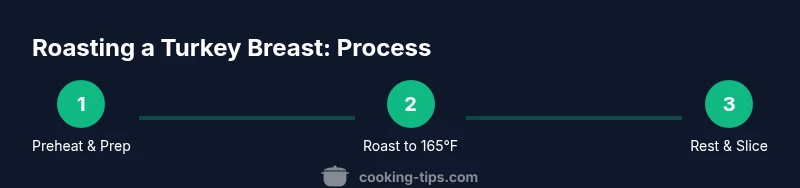
To cook a turkey breast in the oven, target an internal doneness of 165°F (74°C). Plan about 20–25 minutes per pound for boneless breast and 25–30 minutes per pound for bone-in. Roast at 350°F (175°C), then rest 10–15 minutes before slicing to retain juices. Use a thermometer to verify; tent with foil if browning too fast.
Why oven temperature and resting matter
According to Cooking Tips, roasting a turkey breast successfully hinges on consistent heat, moisture management, and a well-timed rest. The oven temperature determines how quickly moisture leaves the meat, while a short rest after roasting lets juices redistribute for a juicier slice. Skipping the rest or opening the oven door frequently can cause uneven doneness and dry edges. Understanding these factors helps home cooks plan a reliable roast every time. In the rest of this guide, we’ll unpack how weight, bone presence, and seasoning influence timing, and translate that into a practical, easy-to-follow method. This foundation also aligns with standard food-safety guidance from federal resources that emphasize safe handling, even heat, and thorough cooking.
What you’ll find in this guide
You’ll learn how boneless versus bone-in breasts change timing, how to choose the right weight, and how brining, rubbing, and optional basting affect moisture and flavor. The goal is to give you a dependable method that works in most home ovens, with clear temperature targets and practical do/don’t tips. We also reference authoritative food-safety guidance to help you cook safely and confidently.
Practical scope and safety framing
Every oven behaves a little differently, so it’s essential to rely on a thermometer rather than time alone. The recommended internal temperature of 165°F (74°C) is a safety benchmark that also preserves tenderness. Resting after roasting is not optional; it allows carryover cooking to finish and juices to redistribute, yielding a slice that tastes moist rather than dry. This section sets the stage for a step-by-step method you can customize for your kitchen setup and turkey size.
How weight, bone, and thickness affect the roast
Weight directly influences total roasting time, but thickness and whether the cut is boneless or bone-in also matter. A thicker breast or a bone-in roast will need more time to reach 165°F internally, especially toward the center. Conversely, a thin, boneless breast can reach target temps more quickly, sometimes with less risk of overcooking the outer layers. The key is to monitor the thickest part with a reliable thermometer and rotate the pan if possible for even browning.
Visual cues and doneness beyond the thermometer
While a thermometer is the gold standard, you can also look for gentle browning and clear juices running from the thickest part when pierced (not red or pink). If juices appear pale or the surface is drying before you hit 165°F, consider a brief tent with foil to shield from direct heat and finish cooking more gently. These cues work best when paired with a reliable temperature check.
Consolidated tips for home cooks
- Preheat the oven to 350°F (175°C) and use a rack to promote air circulation.
- Use chicken or turkey stock in the pan to add moisture and help create a light pan gravy.
- Let the breast rest 10–15 minutes after removal to finish cooking and redistribute juices.
- Check for 165°F in the thickest portion, not just the surface.
- If the top browns too quickly, tent with foil during the last 10–15 minutes of roasting.
Tools & Materials
- Oven(Preheat to 350°F (175°C). Ensure accurate temperature with an oven thermometer if available.)
- Roasting pan with rack(Elevates the turkey for even heat circulation.)
- Meat thermometer (instant-read)(Probe the thickest part without touching bone; target 165°F (74°C).)
- Aluminum foil(Tenting during the last minutes can prevent over-browning.)
- Basting brush (optional)(Use sparingly if you choose to baste for moisture.)
- Carving knife and cutting board(Sharp knife for clean slices.)
- Paper towels(Keep surfaces clean and dry when handling raw turkey.)
Steps
Estimated time: 60-90 minutes
- 1
Preheat oven and prepare roast
Preheat the oven to 350°F (175°C). While it heats, pat the turkey breast dry with paper towels and season liberally with salt, pepper, and any preferred herbs. Placing the breast on a rack helps air circulate around the meat for even cooking.
Tip: Starting with a dry surface promotes browning and reduces steaming inside the pan. - 2
Season and, if desired, brine
If you’re brining, soak for 1–2 hours; otherwise, rub with olive oil and a light herb mix. Salt helps retain moisture, while aromatics like garlic, thyme, or lemon add flavor without overpowering the natural turkey taste.
Tip: For quicker flavor, mix herbs into the oil and brush onto the surface for even coverage. - 3
Position in roasting pan
Set the breast on the rack in the roasting pan, skin-side up if possible, so fat renders evenly and baste flavors into the meat. Ensure there’s space around the roast for heat to circulate.
Tip: Rotating the pan 180 degrees halfway through helps even browning if your oven has hot spots. - 4
Insert thermometer and start roasting
Place the thermometer into the thickest part of the breast, avoiding bone. Roast until the internal temperature reads 160–162°F (71–72°C) as you approach the final stretch.
Tip: Don’t rely solely on time; thermometer readings while roasting are your best signal. - 5
Finish and rest
Remove from the oven when the thermometer is near 160–162°F and tent with foil. Allow the turkey to rest 10–15 minutes; carryover cooking will bring the internal temperature to 165°F.
Tip: Resting is essential; it reabsorbs juices, yielding a tastier slice. - 6
Carve and serve
Slice across the grain into even pieces. If you plan gravy, deglaze the pan with a splash of stock, scrape up browned bits, and simmer to a smooth consistency.
Tip: Serve with a simple pan gravy to compensate for any natural juiciness in the breast.
Quick Answers
Can I cook a frozen turkey breast in the oven?
Cooking from frozen is possible but not ideal for texture. Thaw the breast fully in the fridge before roasting for even heat distribution. If you must cook from frozen, allow significantly more time and monitor internal temperature closely.
You can cook from frozen, but thawing first gives you more even cooking and juicier results. If you go frozen, expect longer time and watch the thermometer closely.
Should I brine the turkey breast?
Brining can dramatically improve moisture, especially for lean turkey breasts. A light brine for 1–2 hours works well; avoid oversalting. If you skip brining, a olive oil or butter rub still helps moisture and flavor.
Brining can boost moisture, but a simple oil and herb rub also works well if you’re short on time.
Is 165°F safe for turkey breast?
Yes. The USDA recommends an internal temperature of 165°F (74°C) for turkey to ensure safety. Use a thermometer and verify in the thickest part of the breast.
165 degrees is the safe target for turkey; check with a thermometer in the thickest area.
Can I use a convection oven?
Convection can cook faster and brown more evenly. Reduce the temperature by about 25°F (14°C) and monitor doneness closely to avoid drying out.
Yes, convection works well—just lower the temperature and keep an eye on the timing.
How long should I rest the roast?
Rest the roast for 10–15 minutes after removing from the oven. Resting helps juices redistribute and finishes cooking through carryover, improving texture.
Rest for 10–15 minutes to keep slices juicy.
Can I spatchcock a turkey breast?
Spatchcocking flattens the breast for faster, more even cooking. Expect shorter times and check doneness earlier with a thermometer to avoid overcooking.
Spatchcocking cooks faster and more evenly; monitor doneness with a thermometer.
Watch Video
Top Takeaways
- Check for 165°F internal temperature.
- Rest 10–15 minutes after roasting.
- Boneless cooks faster than bone-in.
- Use a rack for even heat and moisture retention.
- Thermometer accuracy beats clock-time every time.