Cook Time for Pork Chops: A Practical 2026 Cooking Guide
Explore cook time pork chops across thicknesses and methods—pan-sear, oven finish, grill, or air fryer—with safe temps, resting tips, and practical timing guidance for reliable results.


Factors that influence cook time
Cook time for pork chops is influenced by multiple variables that cooks should understand to hit the desired level of doneness without overcooking. The thickness of the chop is the dominant factor: a 1-inch cut will cook faster than a 1.5-inch cut, and a bone-in chop generally takes longer than a bone-free version. Starting temperature matters too; meat closer to room temperature will cook more evenly than meat straight from the fridge. Heat level and method (pan-sear, oven finish, grill, or air fryer) change the heat exposure profile, so you should plan your steps accordingly. Don’t forget carryover cooking; even after you remove the chops, they rise a few degrees as the juices redistribute. Finally, resting time after cooking helps juices redistribute and improves slice-ability, especially for slightly pink centers.
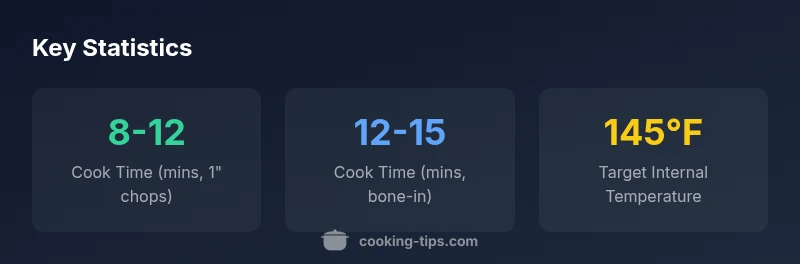
For reliable results, think in ranges rather than exact minutes. Typical 1-inch boneless chops finish in the 8-12 minute window when started with a hot pan and finished in a hot oven, while bone-in cuts push toward the 12-15 minute end of the spectrum. If you’re cooking at altitude or using a very powerful burner, you may need to tweak these times slightly. A quick thermometer check at the end confirms doneness.
Pan-seared then oven finish: a reliable method
This method combines the flavor of a quick sear with the precision of an oven finish. Start by patting chops dry and seasoning with kosher salt or your favorite spice blend. Preheat a heavy pan (cast iron or stainless steel) over medium-high heat with a small amount of oil. Sear each side until deeply browned, about 2-3 minutes per side for 1-inch boneless chops. Transfer the pan to a preheated oven at 400°F (200°C) and cook until the internal temperature reads 145°F (63°C). Remove, rest for 3-5 minutes, then serve. This approach minimizes surface moisture loss and produces a juicy center with a crisp exterior.
Tip: If you don’t want to transfer pans, finish the chops on the stove by basting with butter during the last minute of cooking and tilting the pan to collect flavorful melted fat.
Grilling pork chops: timing and heat management
Grilling adds a smoky note and quick flavor development. For 1-inch boneless chops, aim for high direct heat and flip every 3-4 minutes, totaling 6-8 minutes of cook time. For bone-in chops, extend to 8-10 minutes in total, keeping the heat medium-high to avoid charring. Use a two-zone setup if possible: a hot zone for searing and a cooler zone to finish through indirect heat. Check for 145°F internal temperature and rest briefly before serving. To prevent flare-ups, keep a spray bottle handy and move chops away from direct flames if needed. A light brushing of olive oil or butter during cooking adds richness without oversaturating the surface.
Alternative methods: air fryer and broiling
Air fryer can be a fast, convenient path for evenly cooked chops. Preheat to 400°F (200°C) and arrange 1-inch chops in a single layer without overcrowding; cook 8-12 minutes, flipping halfway. For broiling, place chops on a rack and broil about 6-8 minutes per side depending on thickness, watching closely to avoid burning. In both methods, target 145°F and allow a brief rest to reabsorb juices. If you’re short on time, use the air fryer as your primary method, then finish with a quick sear in a hot pan to maximize crust.
Temperature targets and resting for juicy results
No matter the method, aim for an internal temperature of 145°F (63°C). Remove chops from heat just shy of the target by 3-5°F to account for carryover heat. Resting is essential: it lets juices reabsorb into the meat rather than spilling onto the cutting board. A longer rest is helpful for thicker chops, but avoid waiting too long in a cool environment, which can cause the meat to lose heat. If you carve too soon, you’ll lose moisture; if you wait too long, you risk a cooled center. A practical rest window is 3-5 minutes for most kitchen setups.
Practical timing checklist for weeknight cooking
Create a simple rhythm: plan to thaw and pat dry the chops, season, preheat your pan or oven, and set a timer. Use a single method (pan-sear or oven finish) for predictability. Keep a thermometer handy and monitor the temperature as you cook. Set aside a hot plate or rack for resting to keep the meat warm without steaming. When timing multiple dishes, multi-task by starting sides that finish with the chops, ensuring everything lands on the table hot and flavorful.
Common mistakes and how to fix them
Common missteps include overcooking, under-seasoning, and crowding the pan. Overcooked pork chops lose juiciness; always use an instant-read thermometer for precision. Season generously with salt and allow at least 15 minutes for salt to draw moisture if you’re brining the chops. Avoid overcrowding the pan; give each chop space for even browning. If the crust forms too slowly, heat up a notch and give each side a longer sear time in short intervals to avoid burning.
How to tell doneness without a thermometer (not preferred)
Appearance alone is not reliable; if you don’t have a thermometer, cut into the center after resting and observe the color and juice. A pale pink center with juices running clear is a sign of doneness for many home cooks, but this method is not as precise as using a thermometer. When in doubt, rely on doneness guides and proper rest times to minimize risk.